

Introduction
Cryptocurrency mining, over a decade long until now, was associated with energy-intensive machines that solve cryptographic puzzles that are needed to operate blockchains, but that are frequently criticised as using a huge amount of electricity without necessarily generating computationally meaningful output. That paradigm has started to change radically in November 2025. Another trend has risen: AI miners, autonomous software agents that do not make money by hashing, but by taking actual computational tasks. It is one of the most important developments in blockchain technology since the introduction of Ethereum smart contracts, which establishes a completely new economy in which machine labour can be valued.
Examples of these AI miners are data labelling, model inference, simulation, prediction, on-chain verification, audio/video processing and decentralised AI training. They do not solve some senseless puzzles but do the real work required by businesses, developers and decentralised networks. Their earned crypto is more of a direct payment of useful output and not necessarily a consensus mechanism reward. This transition has brought colossal attention among Web3 developers, artificial intelligence scientists, graphics card farms, and cloud vendors.
November 2025 is a turning point in that the first large-scale networks capable of useful computation by AI have gone into active use. Agents are now autonomous; they bid for workloads and optimise their performance, and they route tasks over decentralised networks, and they are paid in tokens in ways that are completely programmable. What has been created is a fast-growing marketplace in which autonomous digital workers add value 24/7 without human oversight.
It discusses the mechanics of AI miners, their growing significance to the future of crypto innovation and how their emergence might transform tokenomics, the economics of mining, and the world of global digital labour, and the industry of AI itself. It analyses the technical bases, the economic consequences, the social effects, and the future perspectives of this new frontier wherein artificial intelligence and blockchain will become one unified, self-sustaining environment.
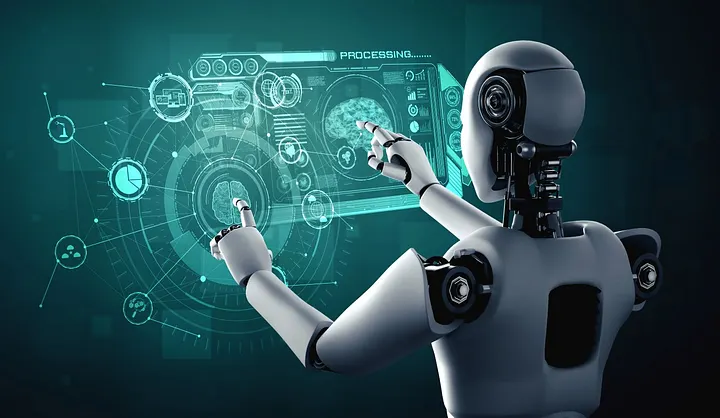
What Are AI Miners? The Shift from Hash power to Brainpower
AI miners are the next stage of crypto mining, and the shift towards intelligent computation, rather than the brute-force one. Traditional proof-of-work systems have miners dissipate energy to solve cryptographic puzzles that do not have any intrinsic value other than network security. However, AI miners are engaged in activities that bring utility to the world. Computational reasoning, prediction, inference, or specialised processing, on behalf of decentralised clients, on a blockchain-based marketplace, is their work.
The central theme in AI mining is useful work, in which a computation helps with something: the analysis of images, neural network execution, large data indexing, simulation, identity verification or decentralised AI services. AI miners do not solve math puzzles, but they are working on tasks actively requested by businesses, researchers and protocols.
The AI miners work independently. They operate as programs that can read instructions, choose the right workloads, optimise computational resources, and submit the results accomplished to validation. These agents can also be in the form of enduring identities on-chain, score reputation, and they can have wallets under smart contract control in which they are rewarded.
It is a paradigm shift towards brainpower as opposed to hashpower for two reasons. To begin with, it makes mining incentives conform to actual economic activity. Miners no longer receive payment based on the security they provide to a network, but receive tokens in return for contributing computational work, which is internally valuable. Second, it makes mining accessible to any computational cluster, GPU farm or AI device that can make inferences or process work. This democratizes mining that is not based on specialised ASIC hardware.
Both AI mining and decentralised AI ecosystems have an inseparable relationship. As the AI models get decentralised, their training, inference, and maintenance demand distributed compute power, which AI miners are ideally suited to do. They form the basis of decentralised AI infrastructure, which is the computational layer to run privacy-sensitive AI applications, autonomous agents, and on-chain intelligent systems.
This paradigm shift in the mining industry is an indicator that the future will see crypto networks compensating for productive computation over wasted energy, and it will revolutionise the two industries.
How AI Miners Work — The Architecture Behind Machine Labour
AI miners work on a stratified structure that extends a chain of blockchain protocols, decentralised markets, and autonomous agents into an uninterrupted computational ecosystem. The basic one is task networks, which are decentralised platforms where jobs are posted computationally, and miners bid or accept work. These networks have smart contracts in which work parameters, payment terms, validation rules and reputation scoring systems are defined.
On the second layer are the AI agents themselves, autonomous software objects, which are trained to comprehend tasks, manage computational resources, and provide outputs. They can be used on any kind of hardware environment: home GPUs, cloud servers, AI accelerators, and clusters of data centres. They have autonomy whereby they self-select tasks according to the rate of reward, difficulty, and hardware compatibility.
Cryptography verification and redundant computing are used to perform task validation, to guarantee the accuracy and reliability of its results. Rather than having each miner do the same calculation, a group of miners is assigned the task, and others are used to confirm the task with zero-knowledge proofs or probabilistic checks. This renders the system effective and upholds integrity.
The third tier is the payment and settlement layer, which is supported by smart contracts. A miner can automatically release their payment to their wallet when he or she submit a valid output. Speed, accuracy or trust score may be set up as token incentives. This matches long-term incentives and eliminates evil deeds.
AI miners also tend to have on-chain identities to gain a reputation over a period. These identities will enable the clients to choose high-performing miners, and miners will get more rewards due to verified and regular work. This identity layer is essential as it substitutes the traditional centralised marketplaces with decentralised trust mechanisms.
The architecture is also designed to scale autonomously, with miners being able to spin up or spin down more compute resources to meet large workloads or reduce them when there is a decrease in demand. An AI-based orchestration enables the miners to vary the computation, memory, and network use to maximise profitability.
This decentralised AI mining system is a self-organising, dynamic ecosystem in which self-sovereign agents are engaged in meaningful work as blockchain protocols facilitate the coordination of incentives and verifications.
The Economic Model — How AI Miners Earn Crypto for Useful Work
The economics of AI mining are fundamentally different from traditional crypto mining. AI miners are paid to perform the actual computational work they accomplish, as opposed to receiving block rewards due to hashing. their revenue is pegged on output and productivity as opposed to brute hardware strength.
The crypto earned by AI miners occurs in three main channels:
Task Rewards
The most direct payment is the one received when completing tasks that have been posted on the decentralised job markets. The costs of tasks are determined based on their complexity and computation intensity, along with urgency. Video processing or deep learning inference are high-demand tasks that receive greater rewards compared to simple batch processing.
Since the tasks represent the actual economic value, it is much more stable and diverse than usual mining rewards. The miners are rewarded with tokens depending on their contribution to the computations required by the network.
Reputation-Based Bonuses
Highly accurate, high-turnaround, and consistent miners earn reputation tokens or multipliers, which increase earnings. Reputation is turned into a source of mining power, which enables the trustworthy miners to perform the high-value tasks and higher-value reward levels.
Staking and Escrow Systems
It has been seen that many task networks encourage miners to put a bet on the network to avoid dishonesty. Not only do successful workers receive rewards in terms of work, but it also receive rewards in terms of stakes. This two-income system is appealing to miners who need active and passive incomes.
Economic Benefits compared to Traditional Mining.
AI mining optimises energy usage by matching calculations and productive results. It reduces barriers to entry as well, and more hardware can be used. Also, miners can dynamically choose lucrative workloads, as in cloud compute marketplaces.
The economic model is very pliant. The value generated by miners scales with the increase in AI demand, particularly inference and real-time processing. The AI-task networks do not encounter the same issue as blockchains, where mining rewards decrease with time, but instead they expand with the needs of the world’s computations.
AI mining is a move towards sustainable utility-based token allocation that is informed by real-world market demand for computational labour.
Why November 2025 Is the Turning Point for AI Mining
In November 2025, there is a crucial one, as several technological, economic, and societal forces came together and put AI mining in the mainstream. Decentralised AI networks have been developed over the years and are sufficiently advanced to support large-scale workloads. This formed a critical mass of demand that enabled AI miners to have sustainable, predictable rewards.
The biggest driver is the demand for an AI inference explosion. With the infiltration of AI applications into daily life, education, health, business, and creative applications, there is an enormous demand for decentralised computing to execute models in real time. This demand cannot be fulfilled by centralised cloud providers alone, and businesses are looking towards alternative cost-efficient and censorship-resistant solutions. This paved the way to decentralised AI compute networks in which AI miners can prosper.
The other reason is enhanced decentralised verification approaches. The point of zero-knowledge proofs and cryptographic consensus over computation had become a reality, and it became feasible to verify AI outputs. This addressed the big-trust problem that had been holding up the use of decentralised compute markets.
Also, the wider crypto market in late 2025 will be out of speculative investment and will be based on utility-based ecosystems. With real-life applications, investors and creators are focusing more on practical applications rather than token releases guided by hype. AI mining is a perfect fit in this new story, with its ability to create tangible value and provide sustainable token distribution.
Also in November 2025 was greater participation of GPU farms, AI startups and the decentralised cloud provider. Their involvement catalysed an increase in the supply of computers and confirmed the potential of the industry on the long-term basis.
The regulatory bodies have begun recognising decentralised AI compute networks as legal service providers, which decreases ambiguity and acceptance. Together with a wave of new protocols coming out in November, the ecosystem became a tipping point such that AI mining became economically feasible, technologically scalable, and publicly known.
This intersection turns November 2025 into the day when AI mining had turned into something of necessity, not an experiment, but the next phase of blockchain and AI implementation.

Autonomous Agents — The Rise of Self-Optimising Machines
The growing autonomy of the miners is one of the most notable aspects of AI mining. They are not old software or robots from the early crypto days. Rather, the AI miners are extremely proficient agents in charge of themselves, profit maximisation and even, in a way, develop in time.
The current AI miners can analyse the workloads, measure the profitability of the tasks, and scale the compute resources with minimal participation of human. They keep track of hardware health, regulate power consumption, and scale compute clusters depending on network demand. There are those agents that incorporate reinforcement learning so as to continually optimise their decision-making process to be able to outperform manually operated miners.
These independent agents are involved in the bid systems and the task networks place workloads, and miners automatically estimate prices and time. Sufficiently performing agents are rewarded with tasks, which in turn form a competitive marketplace with intelligence being the main distinction.
AI miners are also capable of self-healing. In case a miner notices that its performance is affected, e.g. it overheats, the network is unstable, or the memory is overloaded, it automatically reroutes its tasks or halts its work until the condition is stable. This saves time and enhances the reliability of tasks.
The other innovation is the development of cooperative clusters of agents, where two or more AI miners collocate to accomplish big tasks. Such agents can allocate workloads to share the intermediate products and cross-validate the results. This helps them to do complicated calculations that could not be done in distributed data centres before.
Artificial intelligence miners make mining an intelligent, dynamic and competitive ecosystem. It opens the system of global computational labour force where machines bargain, perform, and pay tasks without human intervention.
Finally, self-mining AI can become a financial entity in the future that manages its budget, reinvesting profits into hardware, or sending jobs to external resources. This foreshadows a time when smart digital economies can exist autonomously, and machine labour is self-reliant.
Impacts on the Crypto Industry — A New Foundation for Decentralised AI
AI mining is transforming the crypto business down to its core. Decentralised networks can support large-scale AI services for the first time, without the use of centralised cloud environments. This opens up a whole new set of decentralised applications in which AI is built into the very heart of each user experience.
AI miners have an advantage in DeFi protocols in that they add predictive analytics that function in real time to trading algorithms, risk analysis, and liquidation. Rather than having centralised data providers, protocols apply AI miners to process market signals, simulate, and generate insights that enhance stability and efficiency.
The Web3 social protocols use AI miners to do content moderation, recommendation engines, and identity verification to form safer, more practical decentralised social networks that do not have central control.
Gaming projects use AI miners to drive dynamic NPC behaviour, procedural content generation, and real-time analytics on players. This makes Web3 games have more detailed and immersive worlds and decentralised ownership.
The advantages of smart contract ecosystems are AI-assisted auditing, anomaly detection, and security monitoring. AI miners can scan the transactions, detect suspicious patterns, and avert exploits faster than human analysts.
The crypto infrastructure level changes as well. Rather than spending lots of money on cloud providers to index, relay, or make the data available, networks send out jobs to AI miners. This lowers the costs of running the operations and enhances decentralisation.
This is perhaps the most significant effect, which is the invention of decentralised AI models. AI miners within distributed networks train, update and maintain these models, and these models uphold privacy and support censorship-resistant and globally accessible AI systems.
There is also the AI mining, which alters tokenomics. Networks compensate real computational value instead of the miners with inflationary emissions that lack a utility connection. This is consistent with the demand of the user, establishing more sustainable and stable economic models.
Altogether, AI miners develop into a cornerstone of the future crypto ecosystem, the decentralised infrastructure combined with smart computing on a global scale.
Risks, Challenges, and Ethical Considerations
Although AI mining has enormous opportunities, it comes with vast risks and ethical challenges. Task verification is one of the major challenges. It is necessary to make sure that the work of AI miners is done properly and without cheating or cutting corners. Even with the advanced cryptographic methods, it is hard to prove the results of large AI models. Bad miners can also seek to provide invalid results or come up with artificial outputs that seem to be authentic.
The other danger is centralisation of computing power. Due to the increased hardware demands of AI mining compared to more traditional mining methods, a monopoly of powerful loads of GPUs or corporations could be achieved in the task markets. This decentralisation may jeopardise the ethos of decentralised blockchain networks.
Environmental factors are also important. Inference and model training also consume a lot of energy despite the fact that AI mining is more efficient than hashing. The trick is to have useful computation not be as resource-intensive as traditional proof-of-work mining.
There can be economic imbalances as well. The autonomous agents who obtain tokens may cause an unequal wealth distribution, provided that the only group that gains benefits is people with sophisticated hardware. It is necessary to have avenues of equalising access and participation of various groups of people based on their socioeconomic status.
Ethical issues fully cover the application of AI miners to sensitive uses like surveillance, biometric analysis or political content moderation. In the absence of appropriate governance, AI in its decentralised form might be abused. Clear management and vigorous on-chain governance schemes are important to avoid negative consequences.
Another issue is job displacement. The AI miners taking over the functions of humans might affect such sectors as data labelling, content generation, and client support. Although AI mining opens new possibilities in the economy, society must be ready to deal with disruptions that may occur.
Finally, the digital wealth is governed by autonomous agents that pose unexplored dangers. AI miners or rogue agents might control markets, take advantage of weaknesses, or organise attacks. Good security, identity management and regulatory frameworks are vital.
AI mining is an effective technology, and the risks need to be discussed before they appear and make the future safe and fair.
The Future of Mining — Toward a Global Machine Labour Economy
AI mining is but the start. The idea is projected to become a world machine labour economy in the coming decade, with autonomous agents and intelligent machines working in industries and receiving digital compensation. This vision is of networks of machines that are competing and working together across decentralised markets to do work previously performed by human beings or more centralised cloud-based systems.
We can witness the rise of machine-owned machines where AI agents use profits to upgrade hardware, rent cloud services or create new services. These agents may constitute decentralised corporations, self-operative bodies, which deliver services and earn income and distribute funds without being managed by humans.
The tokenised real-world industries could be incorporated into the machine labour economy. In future, AI miners can be used to do things such as climate modelling, simulated drug discoveries, optimised logistics or automated science. The AI computation value will cease to be limited to the online world, but it will have an impact on the world’s industries.
Hardware vendors might create dedicated hardware for the decentralised AI workloads. AI-mining devices in the form of a broadband router, that is passive-income earning, may be installed in homes.
Tokenomics will evolve, too. In the future, AI miners can be rewarded using not only native tokens, but also tokenised fiat, revenue-backed assets, or cross-chain rewards. This develops sustainable economies where machine labour is paid in multi-currency payment rails.
Governments can come up with regulatory systems to impose taxes on machine labour or set out a code of conduct on the ethical behaviour of AI agents. The international coordination systems can emerge to deal with the social impacts of autonomous digital workforces.
Finally, AI mining is a process where mining is transforming into a technical need from mining as a productive economic enterprise. It will be the first step towards a world where smart agents will be involved in digital economies, the generation of value, and cooperate with a person to form a new era of decentralised innovation.
Conclusion
The emergence of AI miners is one of the most radical changes in the history of blockchain, as well as artificial intelligence. What started as a trial of new mining techniques has sprouted into a complex ecosystem with autonomous agents doing actual, valuable computational work in exchange for crypto rewards. November 2025 will be a critical month in this transition with a new set of networks coming into play, hardware vendors entering the market, and the mainstream adoption of decentralised AI.
An example of AI mining resolving the long-standing criticism of traditional mining is through eliminating wasteful computing processes in favour of productive work that brings tangible value to the global digital economy. It is a democratisation of the AI industry, allowing individuals, developers and organisations to rake in revenue based on computation and not speculation. It is also useful in creating decentralised AI systems that will not depend on centralised cloud providers, enhancing censorship resistance, privacy, and accessibility.
But along with its promise comes responsibility. The industry needs to deal with issues of verification, ethics, environmental effects, and economic equity. The stronger the autonomy agents are, the more important it is to have strong governance, transparency, and control. The machine labour economy will change society in radical ways, and careful consideration must be made to ensure that the positive aspects are equally shared.
AI mining is a new phase in the convergence of crypto and AI, whereby machines have a direct impact on economic efficiency, and digital ecosystems grow beyond the role of human participation. It is indicative of a generalisation in the trend towards intelligent, decentralised, autonomous systems that can manage complete economies and organisations. With such a pace, the future of work, governance, and digital infrastructure can be defined not by human work as a lone entity but by the concerted actions of intelligent agents who make a profit by intelligent labour in their crypto economy, which can be exchanged through useful labour.