
Table of Contents
ToggleIntroduction: The Great Crypto Divide
In the crypto world, a great divide is taking shape. As Bitcoin continues to hold above $110,000, it is a deep freeze in the bigger market. Cryptocurrencies have recorded a massive decline of almost 800 billion dollars of alternative cryptocurrencies or altcoins in the past few weeks, as reported by CryptoRank.io. It is not just a market dip, but a colossal capital flight; one of the greatest capital flights of 2025, as speculative tokens are abandoned in favour of the supposedly safer Bitcoin.
This flight triggered fresh worries of an Altcoin winter, where a boom in Bitcoin dominance is accompanied by a lengthy freeze of smaller coins. The present market is reflective of previous cycles in which institutional investors who are interested in de-risking their exposure aggregate their stakes in the most established asset in crypto. The euphoria that initially drove hundreds of projects up the mountain has been swapped with a defensive hunch, as altcoins remain dry on liquidity and momentum.
This Article will discuss the driving forces of this great divide. We are going to look at Bitcoin as a digital haven, the ugly truth about the altcoin crash, and the institutional flight to quality that is redefining the market. We will separate macroeconomic forces and the trend of widespread deleveraging from the flight of retailers and regulatory demand at such a turning point. The statistics are obvious: the throne is taken by Bitcoin, and the rest of the market is getting acquainted with what a cold crypto winter may be like.
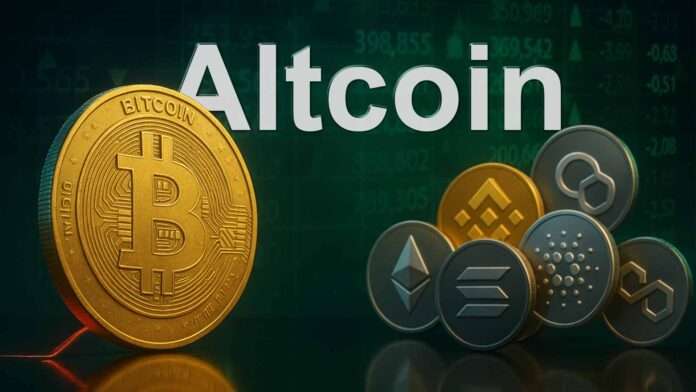
A New Chill Grips the Crypto Market
The crypto world is experiencing a polarizing seismic change that is creating shivers. As Bitcoin remains firm at the price of over $110,000, a very different story is unravelling among other cryptocurrencies. Cryptocurrency trends of CryptoRank.io show shocking turnover: almost 800 billion in value have been wiped out in altcoins within weeks. It is not an ordinary correction, but among the major capital rotations of 2025, as money will be pouring out of speculative tokens and into the perceived security of Bitcoin.
This exodus to quality has sparked a heated debate over the resurgence of an Altcoin Winter, a periodic phase of sharp downward decline of altcoins and skyrocketing Bitcoin market dominance. The present situation is a classic illustration of this dynamic in its infancy. It can be felt as the projects that were soaring high a month ago fall below the levels of major support as market exaltation is substituted by a careful wait-and-watch attitude.
The psychological effect tries to undermine the belief of long-term holders, compels developers to reconsider project viability, and filters out projects based on hype as opposed to substance. To investors, this deep freeze is a bitter experience of the cyclical nature of the crypto market, where the potential of spectacular altcoin gains is always connected to cataclysmic drawdowns. The big question is, is this a short-term consolidation or the start of a long-term deep freeze? The solution is a complicated combination of macroeconomic forces, institutionality, and on-chain measures.
Bitcoin’s Ascent: The Unshakeable Digital Fortress
Bitcoin is the only cryptocurrency that will remain unaffected in the face of an overall decline in the value of altcoins, which will further assert itself as a digital safe haven. Other cryptocurrencies are in their death throes, whereas BTC is steadily over $110,000, and its market capitalization is pegged at an impressive 3.8 trillion. This strength is driven by favourable macroeconomic factors, such as decreasing data on U.S. inflation, which is strengthening the niche of Bitcoin as a hedge against instability and a digital version of gold in the digital age of gold.
The adoption of Bitcoin in institutions is now a fact that should not be overlooked, and one of the main factors that contributed to its power. In Q3 2025, the volumes of trading in the crypto derivatives market of the CME Group reached new historical highs, which indicates a strong engagement of traditional finance. The CME itself observes the evident exodus of capital in the altcoins and stablecoins to BTC, a typical de-risking activity. Institutions are putting more attention on the most secure and liquid assets of the crypto market instead of less practical altcoins or multifaceted DeFi protocols.
Bitcoin dominance rate captures this flight to quality, and it has shot up to 58% its highest rate in more than a year. This main indicator shows that there is a global market movement towards paranoia, and that the capital is being pulled into the safety of the familiar. Its past critics are proving the long-standing story about Bitcoin as a safe-haven asset true by the minute. In a rough market, the investors are clearly providing the biggest, most secure.
The Altcoin Ice Age: A Sector in Distress
The altcoin market is in the depths of a freeze. The Ethereum (ETH), Solana (SOL), XRP, and Cardano (ADA) are among the major assets experiencing the intense selling pressure. ETH is unable to sustain momentum close to $3,930, and SOL has fallen below the $175 mark and lost its momentum of summer rallies. Even the more established tokens are hitting the critical support areas, which indicates the prevalence of weakness.
This anguish is a result of high leverage, low retail involvement, and continued regulatory issues. The excessive leverage that enhanced the returns in the bull market is now hastening the defeats with the snowballing liquidation. In the meantime, retail traders who previously had been driving altcoin rallies have mostly left the market or moved to easier Bitcoin ETFs, leaving a severe liquidity vacuum.
According to market strategist Elaine Wu of Blocklytics Research, the Altcoins are languishing in a liquidity trap. The volume is drying up, funding rates are dropping, and retail sentiment has not yet regained. Such a frozen state may not thaw without a big stimulus, like a spot Ethereum ETF approval or a Layer-2 breakthrough, and by the beginning of Q1 2026, the altcoin market may remain frozen.
The Institutional Flight to Quality and Safety
The institutional risk management of the present market rotation is a masterwork. The actions of big financial players are radically different compared to small-time retail speculators. Institutions are required to maintain capital, whereas retail traders may be interested in high-risk and high-reward. This is the principle that can be observed in their recent actions. The information supports the fact that capital is not only entering Bitcoin, but it is moving out of altcoins and stablecoins as well. It is a planned exodus to quality, an option change to the most liquid and lowest-counterparty risk asset.
It is a strong statement by the observation of the CME Group that capital is moving into BTC to de-risk. It means that institutions are not just spearheading with a one-year explosion in prices; they are putting money in what they perceive to be the safest and strongest investment in a wavering category. This will be like transferring funds out of emerging market stocks into U.S. Treasury bonds when the world is uncertain of everything- the main aim is not to increase funds, but to preserve capital.
This self-perpetuating cycle is a result of this institutional preference. The better the capital flows in Bitcoin, the better its liquidity and stability is, which is why it is even more appealing to other institutions. At the same time, outflows of the altcoins deprive them of the liquidity they require to be successful and worsen their volatility and price drops. This is further widened by the recent news that companies such as JPMorgan are willing to accept BTC as collateral on loans, which is another historical indication most favorable to the blue-chip asset of the crypto market.
Macroeconomic Tailwinds: A Boon for Bitcoin, a Bust for Alts
Ironically, the growth in the distance between Bitcoin and altcoins is increasing because of the improvement in macroeconomic conditions. The most recent weaker inflation rates in the United States are known to favor risk assets because they portend chances of rate reduction in the future. But instead of raising the crypto market overall, this stability effect has been a concentrated phenomenon, concentrating capital directly in Bitcoin.
To the institutional investors venturing into the crypto market, the most rational and convenient point of entry is Bitcoin. It has rich liquidity and proven ETF offerings, and regulatory certainty combined with making it the default choice when it comes to putting money effectively into action. Better risk sentiment thus hastens institutional entry into Bitcoin and does not work its way down to smaller altcoins. This relationship makes it so that macroeconomic gains are enhancing the control of Bitcoin over the altcoins.
The same aspects that should theoretically inform the increased risk appetite are supporting the safe-haven status of Bitcoin in the digital asset environment. Altcoins have a chance to be forgotten even in the best of macroeconomic times until they can prove equivalent institutional accessibility and regulatory predictability.
The Great Deleveraging: Unwinding Speculative Excess
To cleanse its market, the altcoin sector is undergoing a process of mass deleveraging as evidenced by the underlying price action. The borrowed money that supported the gains in the bull market is unwinding quickly, thus exerting a negative effect on other cryptocurrencies. Trading data shows that interest in altcoin perpetual futures has cratered by more than 30 percent every month, meaning traders are liquidating leveraged positions instead of initiating new speculative positions.
Even more dramatic is the situation whereby the funding rate is evidenced to have changed. These periodic long-short trader payments have become negative on several key altcoins, and this is a clear indication that market members are actively betting on further price drops or are not willing to pay premiums to hold long positions. This paradigm change indicates a general non-optimism about any imminent recovery and shows that the altcoin ecosystem is growing bearish.
This torturous yet inevitable deleveraging will be an essential purification of the experimental exuberance that had been piled up in the previous bull run. Although this contraction generates a major pressure in the short term, it drives pressure-overleveraged actors out of the market and speculation of weak hands.
The market structure that comes about is more sustainable in terms of greater future growth as it is healthier and more stable. At the same time, the Bitcoin volatility index has decreased by about 52 to 45 percent, which is a sign of its relative stability and much more confirmation of the fact that it is a safe core to hold in this time of market repositioning and risk re-evaluation.
The Retail Exodus: Vanishing Liquidity and Market Impact
The ongoing drop in the altcoins presents a structural change of the direst nature: the radical exit of retail investors in cryptocurrency markets. These early personal traders would be historically the heart of altcoin systems, both in the form of capital and the speculative ardor that makes rallies work in minor-cap tokens. Their simultaneous exit has generated a liquidity crisis, which has, in essence, changed the balance of the market dynamics, where normal corrections have become extreme declines as selling pressures overwhelm reduced buying interest.
Various reasons can be given to explain this retail retreat, but the most important is the psychological trauma. The drastic market dumping in the summer wiped out portfolios, especially those who had gotten into the market at the height of euphoria. Novice traders were exposed to the harsh reality of crypto volatility as popular altcoins plummeted 70-90 percent off their peaks for first-time traders.
This experience produced a permanent risk aversion, turning sanguine speculators into risk spectators. The get-rich-quick story that used to take center stage in social media has been substituted by a sober discussion on risk management and preservation of capital.
Another impediment to retail in the cryptocurrency ecosystem is its increasing complexity. One that was initially a straightforward topography of a handful of large cryptocurrencies has since erupted into a diffuse universe of Layer-1 blockchains, Layer-2 scaling systems, decentralized finance frameworks, and non-fungible tokens. To move around this ecosystem, it takes a significant amount of technical expertise regarding the interoperability of blockchain, gas costs, and smart contract security, which does not welcome easy investing.
The most important point is that the recent approval of spot Bitcoin ETFs has radically changed the retail access to crypto exposure. These regulated products enable investors to be exposed to Bitcoin via conventional brokerage accounts without having to deal with private keys and cryptocurrency exchanges.
This ease has been revolutionary, as retail capital that would have been spread across dozens of altcoins has been moved straight into Bitcoin. The outcome is a distilled liquidity trap that places altcoin markets in a very weak position when there is some stress on them, which can potentially prolong the ongoing downturn until retail confidence and participation eventually return.
The Regulatory Overhang: A Chilling Effect on Innovation
The lack of regulatory clarity still looms over the altcoin market and has been creating structural headwinds that institutional capital cannot disregard. Although Bitcoin has generally reached a consensus with regulations on a commodity level, the position of most other cryptocurrencies is still highly questionable.
This ambiguity is a fundamental obstacle to institutional implementation, because fiduciary obligation does not allow big funds to invest in assets that would be subsequently found to be unregistered securities. The possibility of enforcement measures will produce an atmosphere of regulation by enforcement that paralyses both investment and development.
This regulatory force has an unfair burden on the altcoins and their ecosystems. The legal uncertainty in established projects is never-ending, and it is almost impossible to plan long-term, and which turns people off the possible collaborations. Venture capital firms, which are critical to the financing of blockchain innovation, have been growing more wary and tempering the pace of developmental capital just as it is most required.
The scenario creates a vicious cycle: the lack of regulation attracts investment away, which retards growth and uptake, which consequently reduces the value of the assets and exposes them to depreciation and a price drop.
The chilling effect is not necessarily limited to investment but also to technological advancement. Failure to develop innovative applications may occur as the developers fear that the legal environment may shift overnight, and the application will no longer be legal. This is especially true of emerging industries such as DeFi and tokenization, in which innovative activity needs regulatory frameworks that literally do not exist currently. Although bitcoin is enjoying the advantage of its classification, the altcoin tableau is in regulatory limbo.
To successfully get the altcoin winter to come to a close, a regulatory spring is necessary. Developing guidelines would enable builders to be creative and institutions to invest without the fear of prosecution by the law. It remains the case that until it is regulated, the regulatory environment will still be in favor of the established position of Bitcoin, and the altcoins will have to deal with an uncertain future where the legal risk adds to the market risk in ways that keep many serious investors sidelined.
Scenarios for the Future: Thaw, Deep Freeze, or a New Landscape?
With the current cryptocurrency markets facing this defining point, there are three different outcomes that might play out in the upcoming months that have some large-scale implications for the investors and the overall digital asset space. The future direction will also heavily rely on some significant variables, such as the stability of the Bitcoin prices, the possibility of the retail liquidity re-entry, and future regulatory changes that could change the whole investment picture.
Most positively, there are the so-called prospects of a so-called managed thaw, in which Bitcoin manages to stabilize above $110,000 and forms a good ground upon which the market can once again have confidence. It is in such an environment that we would perhaps observe the resurgence of capital to high-quality altcoins with solid fundamentals and vibrant communities of development.
The recovery would be led by projects with a real-world demonstration of utility and sustainable tokenomics, and weak tokens could never regain their former valuations. Such a situation would most likely need some positive catalysts, like approval of further spot cryptocurrency ETFs or more consistent regulatory frameworks that minimize institutional uncertainty.
An even more dangerous scenario is a deep freeze in which Bitcoin did not manage to sustain the existing support levels and caused a new, even more devastating wave of deleveraging in the cryptocurrency markets. In this instance, the altcoins may fall into very negative downward spirals that are much bigger than that of Bitcoin, and many projects may end up bankrupt. This would put the ongoing crypto winter far into 2026, with long-term consequences of developer exodus and lost investor trust that may take years to recover.
The radical change in the most potential scenario would be the creation of a brand-new market structure. The problematic state of a long altcoin winter may compel an evolutionary Darwinian process where only the most robust, useful, and well-capitalized projects will be able to survive.
This may entail massive amalgamation within the industry, with more formidable protocols taking over the talent and technology of unsuccessful competitors. The eventual market recovery wouldn’t manifest as a uniform rally across all assets, but rather as the rise of a leaner, more robust altcoin ecosystem fundamentally transformed by its survival through this difficult period.
Conclusion: The King's Crown Grows Heavier
The figures indicate an undeniable narrative: seismic $800 billion is escaping the altcoin markets in a flamboyant flight to security that entrenches and cements Bitcoin as the gravitational core of the crypto universe. This money circulation goes beyond fluctuation in prices and is a monumental structural change that is catalyzed by institutional adoption policies, macroeconomic hedging, and a systemic liquidation of speculative surpluses. Bitcoin is proving its own value proposition beyond a shadow of doubt, and it is no longer acting as a speculative technology stock, but instead as a sovereign, non-correlated store of value, digital gold in a digital-dystopian age.
In the case of the altcoin market, this is a brash yet essential truth to come. The era of easy money, when the projects of low quality were being boosted with the party tide, seems to have passed. The Altcoin Winter renaissance is an unpleasant corrective action that will distinguish substantive innovations and speculations. It compels the whole industry to face its lack of concrete utility, regulatory compliance, and sustainability of value creation.
The question of the future of any project that wants to survive this freeze is clear: create undeniable real-world utility, attain organic adoption, and negotiate the complicated regulatory environment. They must give an attractive incentive as to why capital should not remain in the security of the king.
Bitcoin holds the throne of crypto tighter than ever before, and as the existing market indicates, this crown is heavier and more dictatorial than ever. The remaining market is also receiving a harsh lesson on market cycles and risk perception. The chilliness of the Bitcoin dominance is a very sharp reminder of the fact that, in the digital asset world, safety, liquidity, and institutional trust will be of the highest priority. At this moment, and the prospective future, there is but one real king. Although the winter can be protracted and difficult, it will eventually outline the scenery of the forthcoming cycle of true growth and inventiveness.