
Table of Contents
ToggleIntroduction
This is placing the global crypto market in a unique state of balance as the last quarter of 2025 gets underway. Following several months of volatility, with the highest levels of 2008 being reached at the beginning of October, followed by severe corrections in the middle of the month, the prices have become stable and have been fluctuating within rather small ranges. Bitcoin is priced at around $108,000, and Ethereum is stuck at around $3,800, with most leading altcoins floating. The hitherto unstoppable steam of the previous rallies of 2025 had turned into a silent, wary stasis, which many commentators have said is the pause before the next strike.
This silence has no purpose. Macro-economic drivers have regained their power: the U.S dollar has gained strength, Treasury yields are high, and insecurity about central-bank policy is still a burden on risk assets. An earlier partial government shutdown of the U.S. that occurred in October only added further complexity to the economic data releases, and traders had little new data to base their direction. The outcome, as CoinDesk and Barron note, is a data-silence market – uncertain, cautious, and awaiting.
However, there is a tension currently simmering under this surface. The institutional investors do not go away, and Coinbase Institutional liquidity data indicates that positioning is evenly distributed and ready to move. Big movers are visible on the horizon – upcoming central-bank actions and critical inflation readings will be seen, as well as new regulatory releases and the next wave of crypto-ETFs. The debate now before the investors, analysts, as well as policymakers at large is whether the pause is a mere consolidation or the beginning of something much bigger.
As further discussed below, we discuss why crypto has fallen into this holding pattern, what is influencing the sentiment, and what events might eventually resolve the gridlock as we head to the end of 2025.
What the Pause Looks Like
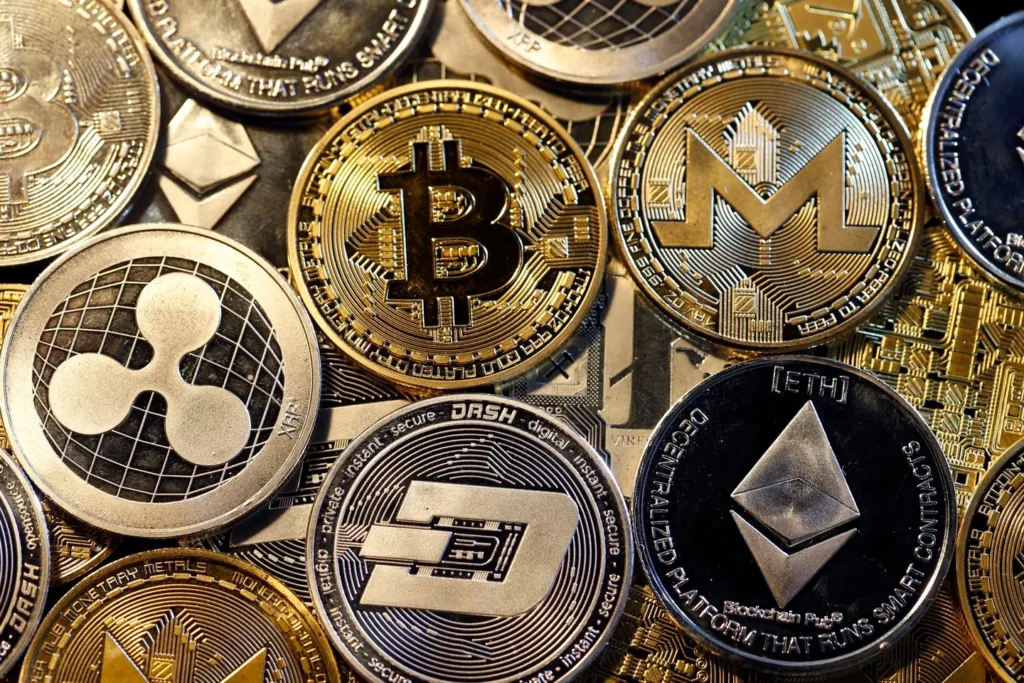
What we see as the present stagnation of the crypto market is not a collapse or reversal but a period of consolidation, characterized by silent trading, a sharpening of volumes, and a lack of confidence in the exchanges. Since the early-October surge shot Bitcoin past $125,000 and temporarily brought the discussion of another bull run back to the fore, the market has been cooling off in a narrow band.
By the end of October 2025, Bitcoin is trading at approximately 108,000, Ethereum at approximately 3,800, and the overall crypto market capitalization is approximately 15 percent less than it was the last month of 2025. These are no longer the values of panic or euphoria; it is a market having a breath.
This moderation is supported by data from Coinbase Institutional and IndexBox. The open interest in derivatives has declined to historic levels, the funding credit rates are back to normal, and the long and short liquidations are at multi-month lows.
The daily volatility of Bitcoin has fallen to less than 2.5 percent in mid-October, the lowest since March 2024, suggesting that neither bulls nor bears have a sense of directional conviction. According to CoinDesk analysts, the retail involvement rate has declined, whereas institutional desks are holding a neutral-to-light-long position, which denotes forbearance instead of panic.
On-chain measures are also telling the same tale. There is a slight rise in expenditure among long-term holders, and they are observed to be holding back with short-term traders, indicating a weak profit-taking cycle and not wholesale exit. Network activity, Wallet growth, the number of transactions, and stable-coin flows remain at the same, yet unimpressive, levels, highlighting that the market is in the observation phase.
These stops and pauses in market psychology are usually followed by decisive actions. The most recent similar stagnation was in the middle of 2023, a few months before Bitcoin skyrocketed 40 per cent in two months. It is yet to be determined whether history repeats itself, but the available data suggest the existence of a market storing potential energy. Until this day, the heartbeat has slackened, not of crypto, but scheduled.
Why the Market Is Stalled – Key Underlying Drivers
The stagnation in the crypto market is not just a coincidence, as it is a result of macroeconomic headwinds, liquidity changes, and institutional paranoia. All these forces are temporary in their own right but have joined forces to bring about the silent calm that investors are experiencing at the end of 2025.
Macroeconomic Pressure:
An overvalued U.S. dollar and continuously elevated yields in the treasuries have been extremely burdensome on risk assets. The opportunity cost of non-yielding crypto has increased because real yields have been at nearly multi-year highs. The inflation is sticky, and the central banks globally are indicating that they are not in a hurry to cut the rates. This macro environment has caused speculative inflows to be subdued and traders to be unwilling to take strong stands, according to Barron and CoinGecko.
Liquidity and Leverage Reset:
Liquidity providers have become wary following the October liquidation event that wiped out almost 19 billion leveraged positions. The funding rates on large exchanges such as Binance and Deribit have stabilized at levels close to zero, implying that the surroundings are de-risked. Coinbase Institutional information reveals that both retail and institutional traders are smaller in terms of exposure and choose to wait out the volatility instead of pursuing a potential gain of dubious value.
Caution of an Institutional and Regulatory Character:
Although the institutional interest is still high, there is a slowdown in capital deployment as companies wait to get more regulatory clarity. There is still development in the U.S and European infrastructure of digital assets, and some of the suggested ETFs are awaiting approval. It is this ambiguity in regulation that has kept big allocators out of the action, further supporting this feeling of stasis.
In a sense, the stall of crypto in Q4 2025 is not really a failure of belief but a planned break. The market is striking a balance between macro prudence and long-run optimism – it is a waiting game being played on policy, liquidity, and the incremental pace of institutional investment.
Major Upcoming Catalysts — What Could Break the Gridlock
Even though the crypto market may seem serene in late 2025, it is not a corpse. There are a number of major catalysts that traders and institutions are trying to position themselves under the surface, and which may be the next direction of the market. How these events spark a new rally or further embed the pause will mostly be determined by the change in policy, liquidity, and sentiment in the next few months.
Central Bank Resolutions and Macro statistics:
The most short-term trigger is the monetary policy. The Federal Reserve and European Central Banks are likely to make it clear on their interest rate trends by the end of the year. A shift to dovishness – indicating early 2026 cuts – would trigger risk appetite, pushing Bitcoin and Ethereum higher as the investors seek more profitable returns. On the contrary, further hawkishness or better-than-anticipated inflation numbers would prolong the stagnation period in the market by increasing the risk aversion.
The Regulatory and Structural Developments:
The imminent passage of more spot crypto ETFs in the U.S. and Asia might create powerful new liquidity sources. Because of the uncertainty in regulation, CoinDesk says that institutional demand is high, but capital has not been allocated. Better frameworks on the stablecoins, decentralized finance (DeFi), and tokenized assets would be a signal of legitimacy and long-term investors, who can perhaps overcome the inertia of the market.
On-Chain and Technical Indicators:
Important technical levels are under close monitoring. An explosion beyond the 115,000 resistances of Bitcoin or a new rise in the number of active addresses and transaction levels might be a decisive change of sentiment in support. A decline below 100,000, on the other hand, could cause a new wave of defensive repositioning.
Finally, the silent period in the market can be terminated suddenly. It is the macro policy, regulation, and technology coming together so that Q4 2025 is shaping up to be a turning point, a quarter that could set the future course of crypto as it enters 2026.
Scenario Analysis — Upside vs. Downside
As the crypto market is in a hold-up phase, investors are divided between optimism and caution. The following significant action may follow three directions: a breakout, a long-term consolidation, or a decline, based on the development of the key catalysts during the rest of 2025.
The Bull Case — Breakout Ahead:
In the bull, macro conditions start taking a downward trend. In case the Federal Reserve credits the markets beforehand with a message of cuts in the rate or inflation undergoes decisive cooling, the liquidity might return in the risk assets. Another leg higher would be based on renewed institutional demand via spot ETFs and more transparent global regulation.
As investor confidence is established, Bitcoin may regain the loss of $125,000 and move to higher heights. The bullishness on altcoins and DeFi, in this scenario, would be expected to skyrocket just as it did in 2021 and at the beginning of 2024.
The Base Case -Long-term Consolidation:
The most likely scenario, as suggested by Coinbase Institutional and CoinDesk studies, is further side trading. In this case, there is no low and stable inflation, and the regulators are sluggish. Bitcoin has been in a range of between 100,000 and 115,000, with volumes being low and traders taking range-bound strategies. This balance is such that institutional infrastructure, custody, compliance, and tokenization are left to grow silently under the surface.
Bear Case Renewed downturn:
An appreciation of the U.S. dollar, increased yield, or a geopolitical shock would compel investors to exit risk assets. Any regulatory losses or ETF delays may further exacerbate market burnout, with Bitcoin falling to below $95,000 and sparking back liquidations. This would put a test on long-term conviction but would also reestablish leverage and make the ground ready to launch the next sustainable rally.
Regardless of how the future unfolds, Q4 2025 is likely to become the next strategic direction of crypto.
Regional & Global Context — Where the Flows & Narratives Differ
The stagnation in the crypto market is a worldwide trend, yet its motivating factors and ways out of it are highly regional. The movement of money, regulatory stance, and the domestic market mood in the major geographies are producing a multifaceted web that will eventually define the next phase of the market.
In the US, institutional adoption and regulatory transparency dominate the narrative. The fact that the spot Bitcoin and Ethereum ETFs have been successful and inflows are on board has been one of the main bull signals, but currently, the market is waiting on the next wave of product approvals or a concrete regulatory framework by Congress. Any stall would be extended by any delay or adverse sign on the part of the SEC or legislators, and would extend the positive news through which much institutional capital would be opened in the wings.
Asia is a very different scenario of discontinuous yet dynamic action. Hong Kong is furthering its position as a regulated digital asset location, with institutional and high-net-worth capital flowing in. The markets based on retail, such as Vietnam and the Philippines in Southeast Asia, continue to be hotspots of the altcoin and DeFi speculation, frequently driving volatility waves. Nevertheless, the uncertainty that remains about the Chinese position puts an overhang on the situation, i.e., the flows in the region may be whimsical and sentimental.
New Markets, especially those in Latin America and Africa, are becoming more and more contributors to crypto as a form of currency insurance against devaluation and inflation. This forms a structural, long-term bid to Bitcoin, which is not so sensitive to short-term macroeconomic conditions in the U.S. Meanwhile, Europe is dealing with the full realisation of MiCA (Markets in Crypto-Assets) and creates a window of adaptation during which compliance costs will slow innovation in the short term but ensure more stability in the long term.
Such a regional deviation implies that the catalyst that eventually thaws the gridlock might be based in any parts of the globe to remind investors that crypto is no longer a monolithic asset but a multifaceted and intricate global mechanism.
What to Watch from Now Until Year-End
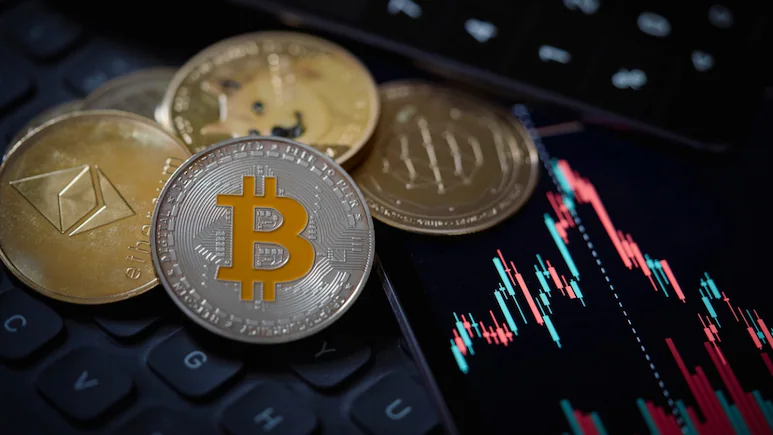
To investors who are walking the fine line in the existing stalemate, it is imperative to have a specific watchlist of indicators and events that can enlighten them on when and how the gridlock will be broken. The coming weeks will be the most critical in terms of the signals that will be given by the following catalysts, which cut across macro, regulatory, and on-chain domains.
To begin with, financial policy indicators will determine the overall risk appetite. Everyone is looking forward to what the Federal Reserve can say in December and what commentary can come out of Chair Powell. Any change in the “dot plot” or any directives regarding when 2026 rates would be reduced would provide a powerful stimulus. At the same time, the key inflation (CPI) and jobs (NFP) reports should be tracked in case of any unexpected events that can make the Fed take a step in one way or another.
There are two developments of paramount importance on the regulatory front. Any tangible advancement on a market structure bill or stablecoin law in the U.S. would have a substantial effect on the re-rating of assets through the risk elimination of the institutionalized investment environment. The adoption of the MiCA framework in Europe and the introduction of new licensing in Hong Kong will globally indicate whether crypto is gaining mainstream and regulatory acceptance or encountering a new clash.
Lastly, there will be on-chain and off-chain and market microstructure data, which will provide real-time evidence of the changing supply and demand. An increase in the exchange outflow of Bitcoin that is sustained would indicate a build-up, probably among big bankers, as a supply contraction. On the other hand, an increase in exchange balances would be a sign of distribution and selling pressure. An increasing congruence of open interest rates and funding rates in major perpetual market swaps would be the leading indicator of the reappearance of speculative fever and a potential burst of volatility in derivatives markets.
With a triangulation of signals of these 3 spaces- macro policy, regulatory momentum, and on-chain liquidity- market participants will be able to transition to strategic placement as the Q4 pause finally draws to its logical end.
Summary & Key Takeaways
The crypto market of Q4 2025 is characterized by a tactical hiatus, a consolidation phase that represents a complicated interaction of forces and not an easy loss of momentum. This impasse is the result of macroeconomic headwinds, a needed reset of market leverage, and a wary institutional approach as they wait for more definite regulatory signals. The early dash of the year has been succeeded by an element of digestion, during which the market is recapitulating past profits and establishing a base upon which it will take its next prolonged stride.
The exit way out of such gridlock depends on a few important catalysts. The first short-term force is the macroeconomic environment, namely the trend of the U.S. interest rates and dollar strength. Coupled with this, a conclusive advancement on regulatory frameworks in key jurisdictions such as the U.S. and Europe holds the capacity to unleash institutional capital hoards close to overnight. The market is technically keeping an eye on both key support and resistance levels, and a decisive break in either direction is likely to usher in a domino of algorithmic and sentiment-driven trading.
This is not a weak period for investors and builders, though it may be frustrating. It is an inevitable consolidation that pushes out unnecessary leverage and enables underlying infrastructure to grow underneath the surface. The important thing in negotiating about this environment is not taking any action but observing keenly. The most effective ones will be those who track the merging of macro data, regulatory announcements, and on-chain liquidity movements.
The delay of late 2025 does not mean the end, but a break. It is a time when the market can take a breath of relief and evaluate its ground and get ready to take the next stride on its path. Be it a decisive attack or a correcting decline, the actions of the coming weeks and impetuses created will determine the tone of the crypto environment in 2026.
Conclusion
The last quarter of 2025 will probably be remembered not as the day of a dramatic price increase or decrease, but rather as the time of a deep silence, as a strategic pause that proved the maturity of the marketplace. The crypto-caused explosive, emotion-based rallies are being calmed by a new reality: the asset class has become deeply ingrained within the global macroeconomics and institutional capital flows.
This maturation is directly reflected in the present stall, where the market is digesting the consequences of tightened liquidity, is waiting to have certainty over the regulations, and is letting its underlying infrastructure thicken.
This phase of consolidation is not inactive. A battle of narratives A battle of narratives is being fought under the surface of sideways price action. Is crypto becoming a mainstream part of the financial system, or is it doomed to continue being the slave of risk-on and risk-off sentiment? The catalysts on the horizon, including the decisions of the central bank, the clarity of the regulations, and the long-term institutional adoption using such vehicles as ETFs, will determine the answer.
This interlude is a chance for the shrewd viewer. It is an opportunity to differentiate long-term technological worth on a case misaligned with hype, to measure the projects being constructed during the quiet period, and to be ready to face the next structural transformation. This market is, in short, resting and building up some potential energy to make its next big move.
The gridlock will break. Whichever way the resolution turns out to be a case of the bullish breakout, due to the dovish Fed and regulatory green lights, or the bearish breakdown, caused by the incessant macro headwinds, the resultant move will be pronounced. The peace of the present is the forewarning of the storm in the future. The following chapter of crypto evolution is going to be the most fateful one for those who used this moment to prepare.