
Introduction: A Turning Point for Digital Assets
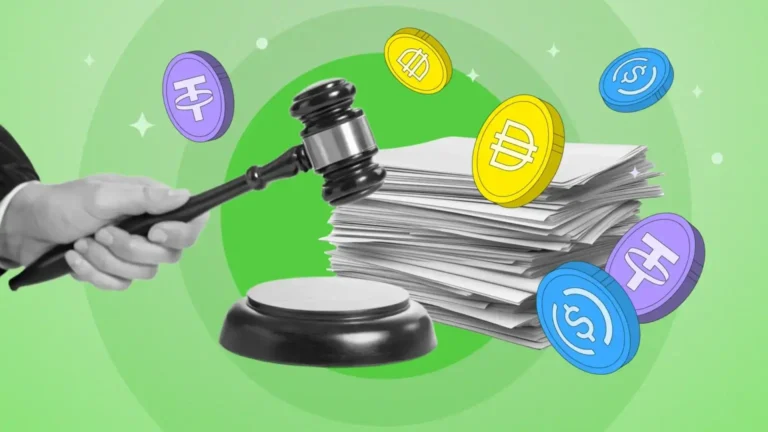
The cryptocurrency industry has arrived at a turning point in its development by 2026. Starting as a marginal project in decentralised money, it has grown into an entire financial ecosystem that cannot be ignored by governments, regulators and other institutions any longer. Crypto-assets have become the foundation of trillion-dollar markets, cross-border payments, decentralized financial services, and continue to be infiltrated by traditional banking and capital markets. Consequently, regulation is no longer a speculative and reactive one–it is a structural one.
The last ten years were characterised by the inconsistent regulation of crypto. The authorities used enforcement measures, legal interpretation of the old financial laws, and informal guidance to deal with the fast-advancing technologies. This method enabled market participants to be uncertain and engaged in regulatory arbitrage, with exchanges, stablecoin issues, and developers moving to jurisdictions with weaker regulation. The level of innovation was high, but so were risks: losses to consumers due to exchange failures, inaccessible reserves of stablecoins, illicit financial flows, and systemic risks that were revealed when the market fell.
The 2026 regulatory world is an indication of a paradigm shift. Such a shift in thinking by policymakers in leading economies is now widely accepted since digital assets are no longer a fad, but a new shape of the financial system worldwide. Rather than raising the question of whether crypto should be regulated or not, the discussion has shifted to how it can and should be regulated, and whether conventional financial regulations can be adjusted to decentralised, programmable systems. Such a change has seen the rise of extensive legal frameworks that clearly define crypto assets, create licensing regimes, and subject market participants to definite obligations.
More importantly, the new laws do not restrict to centralised exchanges. They also start focusing on the decentralised finance (DeFi) protocols, stablecoin issuers, custody providers, and even infrastructure providers like wallet designers and operators of on-chain services. To a greater extent, Stablecoins have become a focus of regulation since their purpose has increasingly become relevant to payments, remittances, and settlement on chains. Governments now view them as financial infrastructure with potential implications for monetary policy, financial stability, and consumer protection.
Meanwhile, the industry is being transformed through regulation in 2026 and not stifled. Although the cost of compliance has gone up and certain business models are no longer viable, the clarity in regulations has also made institutional participation possible, promoted long-term investment, and helped to minimise legal ambiguity. The crypto industry is at the crossroads: it can either conform to a regulated future that incorporates into the traditional finance, or it can stay on the periphery where access to the global market is limited.
This is a crucial point where regulation ceases to be an externality -but a power that is reshaping the following stage of digital asset adoption.
Part I — The International Regulatory Environment in 2026.
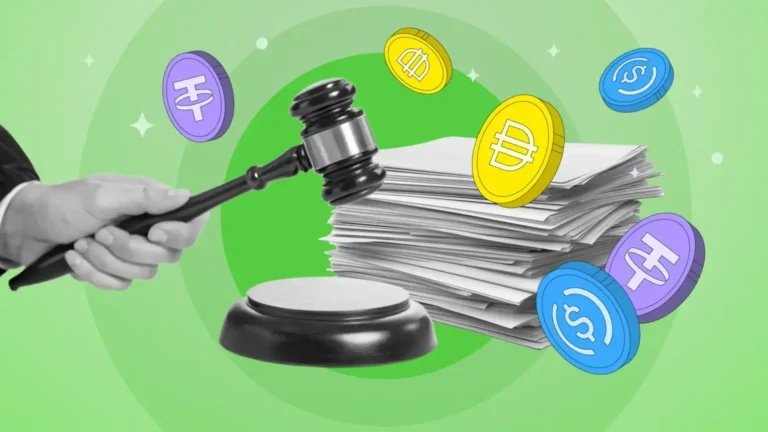
In 2026, the world regulatory environment of cryptocurrencies will be more aligned, coordinated, and decisive than ever before. Governments across the world have taken the shift towards formal structures where digital assets are treated as a separate category of financial instruments, after years of disjointed regulation and jurisdictional ambiguity. Although the world still differs in how they regulate them, an apparent goal has been created to integrate crypto into the current financial system without compromising stability, consumer protection, or monetary sovereignty.
Cryptocurrency regulation in the United States is a questionable political matter that is largely more established than it was several years ago. The lawmakers are still discussing the market structure bills to define the place occupied by the regulatory authorities and screen uniform rules to be adhered to by the exchanges, custodians, and issuers of the tokens. The regulation of stablecoins has gone the farthest, and federal standards have necessitated full reserve support, transparency, and the strict obligation of compliance. Even though monumental crypto laws are constantly in development, the transition of regulation to statutory clarity is an indication that there is a change in direction.
The general crypto regulation is headed by Europe. The Markets in Crypto-Assets Regulation (MiCA) of the European Union has already provided a common legal framework in the member countries. Licensing, governance, capital and disclosure rules apply to the crypto service providers that fall under MiCA, whereas the issuers of stablecoins are subject to stringent requirements as well as reserve requirements. This harmonised mode has minimised regulatory confusion in the EU, though it has equally caused market centralisation and locking out non-compliant assets from regulated platforms.
Regulators have become more realistic and innovation-oriented across Asia. Some financial centres like Hong Kong and Singapore have taken the lead in setting up licensing regimes that enable crypto firms to operate under transparent regulations, but at the same time subject them to strict supervision. These jurisdictions perceive regulation as a competitive edge, which they are trying to win from international companies by providing them with legal assurance and high investor safeguards. In the meantime, other regional jurisdictions are institutionalising crypto recognition as part of a wider system of digital economy and anti-money laundering.
The new markets in Latin America, Africa and the Middle East are also influencing the international scene. Several of them are focusing on crypto regulation, which has become a part of payment modernisation, financial inclusion, and capital controls management. Concurrently, other international agencies like the Financial Action Task Force (FATF) and the International Monetary Fund (IMF) still influence national policies by advocating a unity on compliance practice, sharing of data, and management of risk.
Combined, the regulatory environment of the globe in 2026 is indicative of a definite shift: crypto ceases to be a field of activity in legal grey areas. Rather, it is being soaked up into a layer cake regulatory regime, that is, one that is redefining how digital assets can expand, develop, and connect with the traditional financial sector.
Section 2 — Exchanges Under New Laws: Compliance, Licensing & Obligations
By the year 2026, cryptocurrency exchanges will be the main point of regulatory intervention and reform. Exchanges, which are the most visible access points between conventional finance and digital assets, are now subject to the same regulatory expectations as those of banks, broker-dealers, and payment institutions. This change shows the opinion of the regulators that exchanges influence the integrity of the market, consumer protection and the financial stability systemically.
Among the greatest developments is the extensive establishment of compulsory licensing systems. In large jurisdictions, exchanges are now required to obtain formal approval to operate, now usually necessitating the creation of local legal entities, minimum capital requirements and well-defined forms of governance. Such licenses are not merely symbolic; they are accompanied by the constant supervisory control, periodic audits, and the need to prove the ability to withstand the operations. Unlicensed services are restricted, delisted, or banned from serving local consumers.
There is also an increase in the compliance requirements. Standards such as Know-Your-Customer (KYC) and Anti-Money Laundering (AML) are now international guidelines and not best practices. Most controlled transactions have to be in accordance with what the Financial Action Task Force calls the Travel Rule, which mandates the transfer of sender and recipient details in crypto transactions. Although this has minimised anonymity in centralised trading places, regulators believe it is important in eliminating illicit finance and harmonising crypto markets with global financial standards.
Another significant change in regulations is the custody and asset protection regulations. The exchanges are also becoming increasingly demanded to separate client assets and corporate funds, keep transparent evidence of reserves or audited balance sheets, and maintain high cybersecurity standards. To mitigate the risk of customer losses in case of insolvency or operational failure, regulators in many jurisdictions currently require thorough contingency planning, such as recovery and resolution schemes.
These requirements have redefined the models of exchange business. Through the inclusion of compliant assets on token lists and the exiting of high-risk jurisdictions or the transition to regionalized operations instead of global and service-of-one-size-fits-all operations, many platforms have cut token listings. Smaller exchanges, which cannot absorb the increase in compliance cost, have been either acquired or forced out of the market growing industry consolidation.
Regardless of these problems, there are also benefits that can be brought about by the clarity in regulation. Licensed exchanges have a better institutional credibility, better banking services, and can onboard professional and corporate clients. By 2026, compliance is not just a regulatory cost anymore, but it is also a competitive advantage that determines which exchanges can function at scale in the global digital asset economy.
Part 3 — DeFi in a Regulated World.
In 2026, decentralised finance (DeFi) will hold one of the most complicated and disputed places in the international crypto regulation system. DeFi was never intended to be a product that fits well into the paradigms of standard regulation since it was developed based on the concepts of permissionless access, automation of smart contracts, and a minimum dependence on intermediaries. With the regulation of the crypto industry spreading out more, now policymakers are questioning how or even whether this can be regulated without jeopardising the very principles of DeFi, its decentralisation.
Regulators have become increasingly nuanced in distinguishing between protocols and systems that are genuinely decentralised and systems that have some elements of centralised control. In situations where there is no identifiable operator, issuer or other control body, enforcement has been hard, and in certain instances, regulators have indicated that they were ready to accept some light regulation. Nevertheless, systems in which the development teams are centralised, the governance tokens are concentrated in the hands of the insiders, or the front-end interfaces are managed by the identifiable entities, are increasingly subject to closer scrutiny of the regulation. In such instances, regulators can regulate DeFi solutions as financial service providers, who can fall under securities, derivatives, or lending rules.
Instead of trying to apply DeFi to established structures, some jurisdictions are considering operational methods of regulation. Regulators are not concerned with the organisation structure; they evaluate what a protocol does, like help lend, trade or make payments and regulate it by rule. This has generated controversy as to whether smart contracts are regulated financial products, especially when they take an autonomous nature after execution.
The DeFi ecosystem has started to react. There has also been the emergence of a new set of compliance-driven solutions, such as on-chain risk monitoring, transaction screening and privacy-preserving identity solutions. Such technologies are meant to find a balance between regulatory demands and user control, so that protocols can address anti-money laundering and sanctions demands without completely foregoing the concept of decentralisation. Although such adaptations are controversial among the purists, it has now opened up participation to a wider scope of institutions that are regulated.
The interest level of DeFi by institutions has been increasing with the decrease in legal uncertainty. Regulated or semi-permissioned DeFi is being considered by asset managers, banks, and fintech companies as an effective settlement and liquidity layer and not a speculative frontier. This has seen the emergence of the hybrid model; the decentralised protocols are used in conjunction with the compliance gateways used by institutional users.
Finally, by 2026, DeFi will no longer be a lawless experiment on the outskirts of the financial sector. It is a dynamic industry that is bargaining its identity in a regulated world, one in which the notion of decentralisation is fundamental to its being, yet that flexibility has become the only means of survival in the long run and its entry into the mainstream.

Part 4 — Stablecoins: The New Frontier of Regulation.
By 2026, the regulation of stablecoins has become the centre of a global focus, not only on the regulation of digital assets, but also on the vital financial infrastructure. Formerly used as auxiliary instruments of the trade and liquidity, the stablecoins have become the core of the payments, remittances, on-chain settlement and decentralised finance. Their increasing size and actual application have compelled regulators to treat them with some degree of attention previously directed toward banks.
Financial stability is the main issue that prompts the regulation of stablecoins. Big, popular stablecoins may affect the liquidity situation, capital flows, and even monetary policy, especially in newly volatile or weak currency economies. Consequently, regulators are raising the demands of stablecoins to be fully secured by high-quality liquid assets like cash or short-term government securities. The disclosure of the reserves, radical audit and explicit redemption rights have become the norm, instead of voluntary commitments.
Stablecoin issuance is currently characterised by licensing and supervision. In most jurisdictions, issuers are required to be authorised by financial regulating authorities, meet capital and governance requirements and submit to continuous supervision. The frameworks are designed to make sure that the operators of the stablecoins can survive market stress and fulfil redemptions even during the high volatility times. Once popular, algorithmic or partially collateralised models are not easily accepted under regulation as they are seen to be fragile and systemic.
New stablecoin laws are also anchored on consumer protection and anti-money laundering compliance. Issuers must have robust AML and sanctions screening, they must monitor the flows of transactions, and they must cooperate with regulatory reporting requirements. Simultaneously, transparent disclosure requirements are being implemented to make sure that the users comprehend the type of stablecoin, its support, and the level of risk. This has not only minimised the level of uncertainty but has also increased the entry-type barriers to new issuers.
Such regulatory changes have changed the market for stablecoins. Institutional adoption and closer integration with the traditional finance sector have been observed in non-compliant stablecoins, and opaque alternatives have experienced less access to regulated exchanges and payment rails. Other governments are also promoting working on domestic stablecoins or connecting central bank digital currency projects with stablecoin policy, to keep monetary control.
By the year 2026, stablecoins will be at the nexus of innovation and regulation. Their future will depend on whether regulatory frameworks can support efficiency and global interoperability without stifling competition—an outcome that will heavily influence the broader trajectory of the digital asset ecosystem.
Section 5 — What’s Next in 2026 and Beyond
With 2026 underway, crypto regulation is no longer about establishing ground rules of the game but polishing them. The forthcoming years do not imply the broad declarations of the legislative features, but the process of implementation, enforcement, and harmonisation across boundaries. The focus of the challenge is changing to regulatory navigation instead of regulatory uncertainty as compliance is no longer a one-time event for market participants but a continuous part of the operation.
Further international cooperation is one of the major developments in the future. Cryptos are a global market by nature, but the control over them is mostly national. To solve this misalignment, regulators are broadening information-sharing agreements, harmonising tax reporting standards, and aligning anti-money laundering requirements. Efforts based on international organisations will improve the cross-border transparency of data, decrease regulatory arbitrage, and make such exchanges, stablecoin issuers, and service providers more responsible internationally.
More legislative refinement can be expected in the United States and other great economies. Covering the areas of law, including the market structure, the standards of custody, and the classification of digital assets, the issues that remain unresolved are likely to be reconsidered by the lawmakers. These optimisations might define the limits on commodities, securities, and payment tokens, and the developers and investors would be sure of long-term confidence. But there could be a continued development that is gradual, as opposed to radical, due to the influence of politics and lobbying.
Technological adaptation will also be a significant factor in defining the future of regulation. Programmable controls, real-time monitoring and automated reporting are increasingly being incorporated into blockchain infrastructure to enforce compliance. Such innovations can help lessen tension between regulators and decentralised systems, allowing them to oversee it without necessarily using centralised intermediaries. With time, regulation can become more technologically native as the transparency of blockchains is used to its advantage, instead of being opposed to it.
Simultaneously, there are new regulatory areas that are gaining attention. Policymakers are already interested in tokenised assets of the real world, crypto derivatives, decentralised identity, and financial protocols powered by artificial intelligence. As these sectors grow, they are likely to face regulatory frameworks informed by lessons learned from earlier crypto market cycles.
Going further than 2026, the trend is not hard to find: digital assets are becoming an established part of the financial system around the globe. No longer can one answer the question as to whether crypto will be regulated, but whether regulation can keep up with the rapid pace of innovation. To all the people who are adaptable, the subsequent stage brings about a higher level of legitimacy, wider practice, and sustainability. To the non-compliant, the regulators might put more pressure on restricting the markets, liquidity and institutional capital.
Conclusion: Infrastructure as Regulation.
Regulation is no longer applied to the cryptocurrency ecosystem as an external stressor, but it is already a part of it in 2026. What many people in the industry perceived as a source of threat to innovation is increasingly being seen as critical infrastructure, which is needed to allow the digital assets to grow and expand in the world and provide the legal clarity, trust, and stability to do so. This trend signals the conclusion of the experimental stage of crypto and the start of its adoption by mainstream finance.
In decentralised finance, exchanges, and stablecoins, regulation has completely transformed the way crypto functions. Exchanges have become controlled financial institutions, which are governed, have custody and compliance standards that resemble traditional markets. Although still based on the principle of decentralisation, DeFi has been moving towards more hybrid forms that do not give up regulatory requirements at the expense of full autonomy. Previously being loosely regulated digital equivalents of the fiat currency, stablecoins are now considered systemically important tools with tight reserve, transparency, and licensing mandates.
Notably, regulation has never caused the end of innovation but has diverted it. Designers and entrepreneurs are moving towards designing products with compliance in mind early on, resulting in architectures that are better and sustainable business models. The involvement of institutions has increased as the legal uncertainty has reduced, which has opened more liquidity and long-term capital, which was hitherto locked away by the regulatory risk. In this regard, regulation has been a stimulus to professionalisation and not stagnation.
This change has however come with trade-offs. Increased compliance and regulatory fragmentation have enhanced barriers to entry and enhanced market consolidation. Smaller projects and experimental models have more difficulties in overcoming the complicated legal stipulations and differences between the national frameworks, which still result in uneven levels of competition. Such tensions highlight the necessity of technology-conscious regulation that is adaptive and balances regulation with openness.
In the future, the future of crypto being regulated will rely on collaborating not just among regulators and creators, but also internationally. With the ever-changing digital resources, the regulatory frameworks need to be versatile to adapt to the emerging technologies and strict enough to safeguard users and financial systems. When done, regulation will not just limit crypto, but it will assist its purpose as an inherent building block of the new global economy.
By the year 2026, regulation will no longer be a transitional period or a potential barrier. The scaffolding on which the digital asset future is being formed is it is what crypto can do, and how far it can go.