
Table of Contents
ToggleIntroduction: The Month Crypto Came of Age
Surprise in October of 2025, you would risk skipping one of the most changing times in the history of digital assets. This was a month that was not characterized by one parabolic price pump or a disastrous crash. Rather, it will be remembered in the history books that October 2025 was the time when the crypto industry lost its skin and became a structured financial market and not a rebellious, speculative frontier anymore.
It was a masterclass in market dynamics with regulatory clarity being the trigger, technological infrastructure the base, and a flood of institutional capital the rocket fuel in the month. The story changed too radically that even the very language we use to talk about crypto, legacy finance, vs. DeFi vs. TradFi, started to grow obsolete, as the two worlds no longer collided but also started to merge.
The month was a typical rollercoaster ride, but one that ended on a horrifying climax. It started with an atmosphere of anxious waiting, a shared suspension of breath of the United States Congress about to take the most important digital asset legislation to date. This was succeeded by a typical sell-the-news occurrence that put the determination of all the investors to the test, only to yield to a massive, widespread, domino-like rush, which displayed a strong and committed belief.
This was, however, not the same rally. It was not fueled only by meme coins or leveraged speculation. It was a rally that was anchored on basics, on practical utility, and on the undisputable fact that blockchain technology was discovering its product-market fit in the real world.
This paper is an in-depth recap of that trip – a deep-sea exploration of the price movement, the policy, the tech breakthroughs, and the new stories that will turn October of 2025 into a Surprise of a possible generational turning point of the entire crypto ecosystem. Buckle up, and we’ll go round the whirlwind.
The Macro Picture: A Rising Tide Lifts (Nearly) All Boats
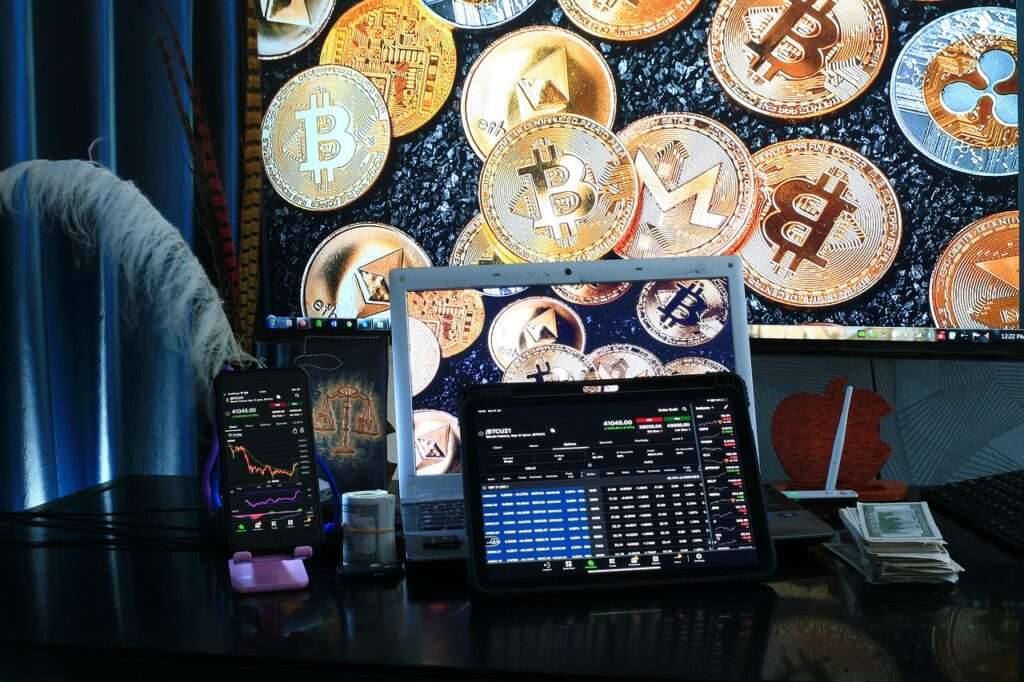
Top-line figures of October 2025 were a narrative of unchecked bullish activity; however, the details were the devil, and the real opportunity. The entire cryptocurrency market capitalization in the world had begun the month at a wary $3.8 trillion but broke the $4.5 trillion level by Halloween with a close of about 4.7 trillion. This was a magnificent 24 percent month-to-month increase, one of the best October surprise performances of the record, which contradicted the old saying in financial markets that October is a month to avoid, and it is called October phobia.
This growth was, however, not a straight, upward curve. The vigorous project-thinning operations of the middle of the month, caused by profit-cashing in on the first news of FIT 21, brutally disenfranchised the strong projects and weak ones, preparing the ground for a more permanent impulse towards progress in the remainder of the month.
The flagship asset, Bitcoin, was the ideal backing in this case. At the beginning of October, BTC was trading at approximately 85,000, and after overcoming the volatility of the middle of the month, it ended with approximately 102,000, which is a healthy 20% increase. Its performance was much less volatile than the rest of the market, and this is an indicator of its increased maturity.
It continued to be strongly supported at the level of $88,000 and heavily opposed at the level of $105,000, which is a psychological level and which it has already hit twice before the end of the month. Indicatively, the association between Bitcoin and the conventional macro markets rose further, especially the U.S. Dollar Index (DXY). Although a rising dollar would normally strain risk assets, the peculiar demand factors of Bitcoin, such as inflows into spot ETFs and its hardening as a digital gold story, enabled it to become decoupled and be the driver of trends, not the follower.
It was surprisingly increased by more than 31 per cent. to $6,200, then leveled off to about $5,900. This huge performance compared to Bitcoin propelled the ETH/ BTC ratio to its biggest post-Merge peak, eventually overcoming a multi-year downward trend. It was all explained by the necessity to release the full consequences of EIP-4844 (Proto-Danksharding), which was now being felt throughout the ecosystem.
On Layer 2s such as Arbitrum and Base, the cost of transactions dropped to fractions of a cent, so a Cambrian explosion of micro-transactions and new applications became possible. Combined with an ever-increasing burn rate, the net issuance of Ethereum was decisively negative, driving its ultrasound money story and capturing capital with technological potential on one hand and good monetary policy on the other.
The Big Bang: The FIT 21 Act Becomes Law
Finally, the most impactful of all the events of October of 2025, and possibly of the past few years, was the signing into law of the Financial Innovation and Technology for the 21st Century Act (FIT 21) by the President of the United States. The U.S. had long since (after years in congressional committees, intense debate, and lobbying) offered a comprehensive regulatory framework of digital assets.
The instant market response was a classic case study of a buy the rumor sells the news. The final passage of the bill through Congress brought the initial sharp spike, which was almost instantly followed by the wave of profit-taking that sent the market down by more 12%. The lack of faith asserted it was a typical crypto hype cycle failure. But they spoke too soon.
A strong and sustained rally started within 48 hours. The market soon came to understand that the sell-off was a temporary liquidity affair, and the signing of the bill was a long-term structural game changer. The answer was the clarity of FIT 21. The law clearly stipulated which digital assets were securities (within the jurisdiction of the SEC) and which were commodities (under the jurisdiction of the CFTC).
The major experiment was the decentralization of a network, which made projects such as Ethereum, and many others work beyond the narrow and strict security rules of the SEC. This instantly de-risked the whole industry of an influx of institutional capital that had been sitting at the periphery in terror of regulatory uncertainty. The winners of this new regime were quite seen at once. Existing, adequately decentralized Layer 1 protocols were re-rated positively as regulatory risk premiums disappeared. Exchanges, miners, and other publicly traded crypto firms had their shares skyrocket as their operations became predictable. Probably most of all, the DeFi industry that has been running in the shadow of an existential threat was given a second chance at life.
FIT 21 offered pathways on compliance with decentralized finance, which was more about governance and transparency as opposed to traditional broker-dealer regulations. This one piece of legislation did not simply shift markets in a one-day shift; it provided the base that the following decade would build on in terms of crypto innovation and investment in the largest economy in the world.
The Altcoin Renaissance: Narratives That Drove Profits
The macro winds were positive, and the regulatory clouds cleared, and capital flowed into the altcoin arena, and a “smart money alt season was a profitable yet varied explosion. The October 2025 altcoin mania was established on strong narratives and real-world functionality, unlike the meme-driven manicures of old cycles, in which three separate sectors emerged that outpaced the noise.
The most overwhelming of them was the explosion of Real-World Asset (RWA) tokenization. The transparency provided by FIT 21 provided TradFi institutions with the go-ahead to scale. The total value locked (TVL) of tokenized U.S. Treasury bills, a niche market that was only one year old, increased more than 150 percent in October alone.
The big asset managers such as BlackRock and Fidelity increased their tokenized treasury platforms, and novel platforms were established to tokenize all commercial real estate and fine art, in addition to carbon credits and intellectual property royalties. The story was strong: blockchain was not only about the creation of new assets, but also about making old, inefficient, illiquid assets more productive and transparent.
The second significant story was the maturity of the AI x Crypto synergy. The 2024 hype culminated in working products. Physical infrastructure networks that are decentralized (DePIN) to provide GPU compute power began to be a critical infrastructure for AI startups forced out of centralized cloud offerings.
Moreover, independent AI agents started to trade on-chain in noteworthy amounts, with dedicated crypto-tokens serving as a form of payment for services, data, and computation. These were not mere proof-of-concepts but were actually making money, and the native tokens rose in value accordingly.
Lastly, the blockchain game and NFT industry had its 3.0. Some of the most anticipated games released managed to go beyond the play-to-earn model and a more sustainable play-and-own ecosystem, where in-game assets were indeed valuable and useful in different virtual experiences. It was replaced by dynamic NFTs, which might alter their appearance or properties depending on in-game or real-world events, and with this new model, a 300 percent increase in the volume of secondary sales in the major marketplaces, such as Blur and OpenSea.
Under the Hood: Key Technical and On-Chain Developments
In addition to the price charts and headlines, October has been a month of deep technical advancement towards establishing an infrastructure of the industry for the next generation of users. The long-time popularized Layer 2 Scaling Wars were in a fever pitch, but no longer about transaction speed: ecosystems, user experience, and modular innovation.
Arbitrum remained on top of TVL and the number of daily active addresses, but was stuck in intense competition with the increasingly popular Superchain ecosystem of Optimism and the skyrocketing popularity of social and consumer dApps on Base. The user was, however, the true winner. The median cost of a transaction on primary L2s was resolved at an average of less than $0.01, and on-chain use was economically feasible to use on applications as simple as purchasing a coffee or tipping a content creator.
One of the most crucial achievements that drew the developers’ attention was a significant advance in cross-chain interoperability. New protocols based on advanced cryptographic methods, such as zero-knowledge proofs also started to supplant the unsafe and trustful bridges that caused devastating hacks in the past years.
Such zk-bridges made the transfer of assets and data between Ethereum, Solana, Cosmos, and even the emerging Layer 2s of Bitcoin. This technological breakthrough made the multi-chain future much less risky, with liquidity and users able to move around without the fear of a bridge exploit taking off billions of dollars. The usability of the whole crypto universe was advanced by a huge leap.
The On-Chain metrics were an objective and data-induced confirmation of the bullish direction. In October, we have seen the trend of net outflows in exchanges, especially in Bitcoin and Ethereum. This showed that investors were shifting their holdings off the trading platforms and into cold storage, long-term storage, which is a typical indicator of accumulation and high conviction on the part of the holders.
In addition, the Mean Coin Age of both major assets kept increasing, indicating that the coins were not traded but held longer. This hodling behavior, along with a spectacular increase in the growth of new and active wallet addresses, particularly in Layer 2 networks, made it appear as though the market was not only profoundly confident of the long-term but also friendly to a new generation of users.
Looking Ahead: What October's Trends Mean for Q4 and Beyond
With the dust not having settled yet on the monumental October, the key question of every investor and builder is: what now? The business of October 2025 is pure, crystal clear: the month when the fog of regulations was cleared. The US is no longer the regulatory minefield but a systematic market forcing other world financial hubs such as the UK and the EU to be quick in developing their own frameworks lest they are left behind.
The emerging clarity can be described as a multi-year tailwind that cannot be overestimated. The entry of institutional capital is ceasing to be a hypothetical when, but a quantifiable when and how much. The gates to new, regulated financial products have been thrown wide open: spot Ethereum ETFs, tokenized versions of every imaginable asset, and so on.
The trends that prevailed during the month are not temporary; they are the basis of the following cycle. RWA’s story is in its first inning, and a possible market that could be solved was the hundreds of trillions of dollars.
AI and crypto are going to continue to integrate, shifting out of infrastructure and payments and into decentralized AI model training and data sovereignty. The proliferation of Layer 2s and the interoperability issue being solved implies that the next killer app is not going to be on a single blockchain, but will be inherently cross-chain, in a way that the advantages of each network are combined seamlessly.
With just two months to go in the year 2025, the market is focused on two milestones. First, will Bitcoin, with its unstoppable inflows of spot ETFs and the newly acquired regulatory legitimacy, be able to overcome the barrier to the $105,000 mark and credibly reach its old high point at the end of the year? Second, can the altcoin frenzy persist in its outperformance, or will we experience the resurgence of the blue-chips at the end of the year? It was October that gave the plan and the assurance.
This is because the market has been de-risked, the technology is scaling, and the use cases are demonstrating worth in October. The story has finally changed its status from speculation to utility. The industry is not only back, but it has also actually, and permanently, become a man.
Conclusion: The Turning of the Tide
When we will put the book down on October 2025, we will realize that the crypto market was not only on a high rise, but it was also being redefined. The month itself has acted as a strong inflection point, a point when the long-awaited new financial paradigm of the industry appeared to have finally taken shape into concrete reality.
The enactment of the FIT 21 Act was not just a regulatory milestone, but it was the time when the training wheels were taken off and the sector acquired the legitimacy and clarity to jump-start into the mainstream. It was not just a green light to speculation but a structural changing point, making crypto no longer a niche, outlaw asset category, but a part of the worldwide financial fabric.
The fashions of October, the dramatic expansion of Real-World Assets, the fully grown integration of AI and crypto, and the scalding scalability of Layer 2 networks, are not passing histories. They are the pillars of the new age. The debate has changed emphatically to whether this technology is going to be adopted to how and where.
It now puts a strong emphasis on utility and efficiency and real-life issues, which is no longer speculative as has been the case in other cycles. The infrastructure that was constructed in the so-called crypto winter was not only stress-tested in October; it was demonstrated to also be able to make it through the next wave of a billion users.
As a prospect, the future is more than ever clear. FIT 21 gives the regulatory certainty that has unleashed an avalanche of institutional capital and innovation that is set to take over 2026. The interoperability and scaling innovations have presented the technical foundation of applications that we have just started to consider.
The volatility of the short is forever a characteristic of this market, but the swings so wild and unpredictable of its adolescence yield to the more even, fundamentals-driven growth in its maturity. It will not be remembered in terms of a particular price, but as the month of turning the tide, when the digital economy, on the foundation of blockchain, really and irreversibly came.