

Introduction
The crypto market is never in short of drama but every now and then, we come to certain moments that seem like a turning point. Early September 2025 brought one of those moments in a bold fashion. The unquestioned leader of the digital asset space, Bitcoin, came into the limelight in two respects:
The difficulty of miners in Bitcoin increased to a new all-time high that embedded the stability of the network and underlined the degree of dedication to the activity of miners across the globe.
Personal net worth Michael Saylor, the co-founder of the Bitcoin advocate MicroStrategy and an unremitting Bitcoin evangelist, grew his personal net worth by more than $1 billion alone this year, as Bitcoin passed the $110,000 mark.
On the surface, both these stories may appear as different strands, one of them highly technical, the other one based on financial celebrity. However, when combined, they paint a wider picture of the growth of Bitcoin as something that is no longer a fringe experiment, but an economic force worldwide. An increase in mining difficulty is a sign of unparalleled network security and miner trust, and the swelling wealth of Saylor is a reward of long-term belief in a risky, but a transforming asset.
This is evolving against a backdrop of a dynamic financial environment. Governments worldwide are developing and refining crypto regulation, central banks are considering rate cuts and institutions themselves are gradually abandoning their cautious interest to active involvement. Then add to those cultural pressures such as meme coins, the discussion on energy consumption, and the ability of Bitcoin to question established finance, and you have a moment that needs to be looked at more closely.
In this paper we will unravel what these milestones entail not only to miners or billionaires but to the common investor, policymakers and the future of money itself. Starting with the psychology of the market, to institutional adoption, we will find out how the new chapter of the history of Bitcoin already means the possibility as well as the challenge of the future.
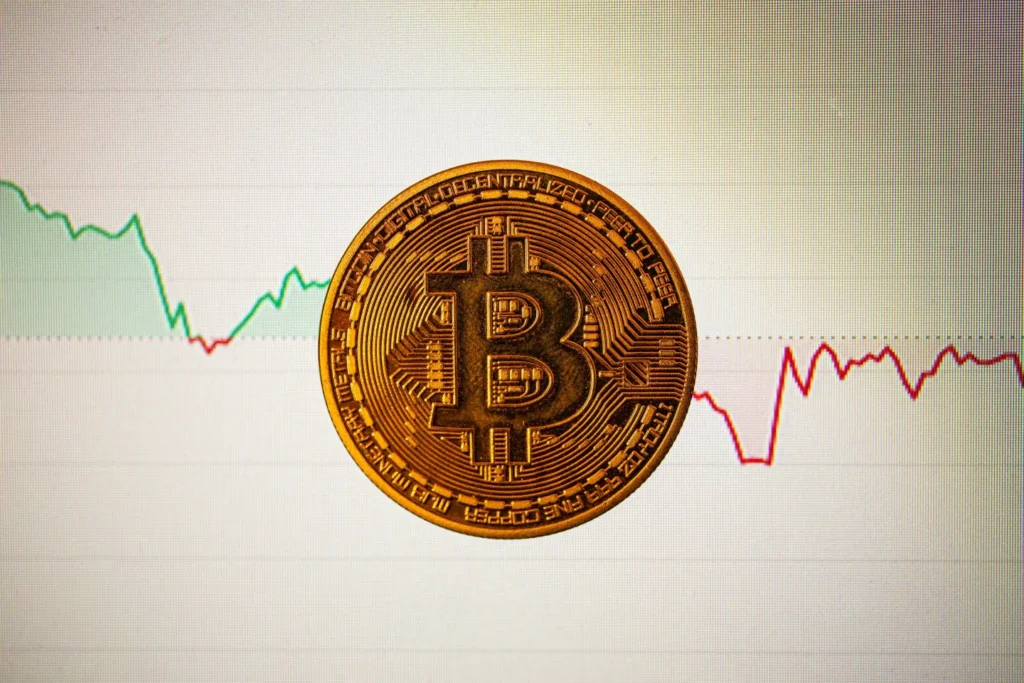
The Cryptocurrency Market in September 2025.
Before examining what is meant by the mining difficulty in Bitcoin and why Michael Saylor is becoming wealthier, we must first capture a picture of the crypto market as it is today. Bitcoin is trading at approximately $111,170 as of September 7, 2025, with an intraday range of $110,017 to 111,281. The second-largest cryptocurrency in terms of market cap, Ethereum, is standing at 4,302 and demonstrates outstanding resilience against the general volatility.
These prices are merely numbers on the face of it. However, when expanded out, you can see a story emerging. 2025 is one of the best years of Bitcoin since it began. Following the boom and bust, BTC has now solidly surpassed the psychological ceiling of $110K, a price at which many analysts believed it would never hit without the full involvement of institutional investors.
Several forces are driving this momentum:
Expectations of a FED rate cut – As inflation decelerates, risk assets such as Bitcoin are enjoying a more favourable macro-economic environment.
Regulatory clarity – The U.S. SEC, the U.K. and even emerging economies such as Ukraine are writing frameworks that legalize crypto involvement and not suffocating it.
Bigger technology trends – AI, tokenization of real-world assets and blockchain interoperability are drawing institutional capital in a scale never seen before.
The most intriguing part about September 2025 is the fact that the market is speculative and structurally healthy simultaneously. Retail traders are moving toward momentum and corporations and governments are constructing actual infrastructure based on digital assets.
The achievements of the Bitcoin network such as record-higher mining difficulty and billion-dollar gains are more than what just headlines, it is an indication of the increasing permanence of Bitcoin in the world of global finance.
What Is the Difficulty of Mining Bitcoin?
The term Bitcoin mining difficulty may seem quite technical to many small investors, yet it is one of the best indicators of the health and strength of the network. In other words, the mining difficulty provides an idea of how challenging it is to get miners to solve the cryptographic puzzles that join new blocks to the Bitcoin blockchain.
The way Bitcoin is designed is that new blocks are added approximately after every 10 minutes. To sustain such speed, the network will change difficulty at the pace of every 2,016 blocks (approximately two weeks). When additional miners (or more powerful computers) are added to the network, the blocks are solved more quickly, and the system answers this requirement by increasing the difficulty of puzzles. Without miners around, difficulty reduces to maintain a steady state.
Why does this matter? Three main reasons:
Security -An increase in difficulty implies more computational strength (hash rate) is securing the blockchain. This renders Bitcoin more resistant to attacks, especially the highly-fared 51 percent attack, in which one actor can hypothetically dominate the network.
Economic signal – Increased difficulty tends to amount to miner optimism. Hardware, cooling and electricity are costly to miners. Provided that they are ready to increase activities, that normally indicates that they are confident in the long-term price direction of Bitcoin.
Market cycle indicator -Historically, difficult periods are likely to coincide with bitcoin bull markets. As prices increase, mining is more profitable, and this brings in more competition forcing the difficulty to go up.
By September 2025 the difficulty of mining Bitcoin reached an all-time high. This is not a mere technical sidenote, but progress indicating that the network is more decentralized, secure, and robust than ever before. It is also positive to investors in that, miners, with some of the most in the game, are gambling on the future strength of Bitcoin.
Billion-Dollar Surge by Michael Saylor.
In case the mining difficulty of the Bitcoin indicates the technical durability of the network, the net worth boom of Michael Saylor is the human aspect of the Bitcoin financial narrative. By 2025, the co-founder and executive chairman of MicroStrategy is now an icon in crypto culture not only due to his initial belief but due to his decision to invest more when others were risking their reputations.
MicroStrategy was one of the largest corporate Bitcoin holders since 2020 and it accumulated over 200,000 BTC by directly buying it, financing its position with debt, and even issuing stock. Occasionally, critics have called the approach, as described by Saylor, a kind of reckless financial engineering, where a software publicly traded company is linked to a digital asset. However, when Bitcoin surged above $110,000 in 2025 his bet became a moneymaker.
This year, the personal net worth of Saylor alone has already increased by approximately 1 billion dollars, in significant part, due to the rise of Bitcoin. Shares of MicroStrategy, which can be perceived as a tracker of Bitcoin exposure in conventional markets, have also soared up. Those who previously considered the company a strange outlier now considers it an institutional model in terms of the adoption of digital assets.
It is not only about the wealth that makes Saylor story so engaging. It’s the conviction behind it. He has always characterized Bitcoin as a type of money that is digital in nature and cannot be inflated, debased by the government, or subjected to the drawbacks of conventional banking: as digital property. Not only has his unrelenting promotion vaulted his personal fortunes to an even higher plane but it has also made Bitcoin a legitimate currency in the eyes of Wall Street and world institutions.
The experience that Saylor goes through illustrates the advantage of believing in a fluctuating asset. Although not every investor has the stomach to ride the wild swings of Bitcoin, his billion-dollar upswing highlights one of life’s most dynamic truths: that long-term through turbulence is often rewarded outsized returns.
Why These Stories Connect
The high level of Bitcoin mining difficulty being record high and a billion-dollar net worth of Michael Saylor may appear to be two completely different stories at the first sight. One of them is very technical and is entrenched in blockchain mechanics, whereas the other is a human-interest narrative of a billionaire. However, once you unravel the layers, they are but two sides of the same coin- and when combined, they show how far Bitcoin has travelled on its path as a niche experiment to a global asset.
The Bitcoin network depends on mining difficulty. When the trouble increases, then it is an indication that miners are spending on equipment, energy and infrastructure. This is not a fantasy, it is actual capital and resources that are committed to the network protection. The miners do not gamble on a small scale; they build up activities because they reckon, they will get higher payments than expenses in the future. Such assurance, on its part, will give investors a lot of confidence that the basis of Bitcoin is firm.
Couple of hours later, the increased prosperity of Saylor is a direct consequence of the same confidence, except that it is manifested in human form. By investing billions in the Bitcoin and not selling during the storm, he placed himself in a better position to gain with the expansion of the network. His financial rise is not merely about his personal benefit- it is an indication that belief in Bitcoin over the long run can bring life-altering results, not just to billionaires, but to the average investor.
Collectively, these stories narrate a bigger fact: Bitcoin is no longer a merely speculative asset. It’s now:
- A network on an industrial scale, driven by enormous computation systems.
- A financial tool, which could change the balance sheets and lives.
- A cultural movement, with stories of endurance, invention and wealth generation.
The relation is direct: the larger the network of Bitcoin (measured by the difficulty), the more the reward of early conviction (measured by the net worth of Saylor) becomes real. One of them is the strength of the system and the other payoff.

Implications for the Market
Then what does the mining difficulty at record highs and the increasing wealth of Michael Saylor imply to the larger crypto marketplace? Not only eye-catching headlines but they trickle through institutions, miners, retail investors and long-term price movements.
Institutional Adoption
Trust is all that institutions have. Increasing mining difficulty is an indication that the network of Bitcoin is safer and more robust than it has never been. In the case of pension funds, asset managers and corporations, this decreases perceived risk. Meanwhile, the case study of the success of Saylor serves as an example of the benefits of early adoption and gives other executives and boards an incentive to consider the addition of Bitcoin to their balance sheets.
Miner Economics
Record difficulty, however, is a two-sided sword for miners. On the one hand, it proves that there is great demand and justifies their presence in the ecosystem. On the other hand, it translates to increased competition and tight profit margins. To remain profitable, miners will require:
1. More effective hardware to eke out additional hash rate.
2. Less expensive, greener energy sources such as solar, wind, or hydro.
3. Geographic diversification, relocating the business to areas that have cheaper electricity.
This may speed up the transition toward green energy mining, which will enhance the environmental status of Bitcoin.
Investor Psychology
Retail investors are motivated by headlines about billionaires growing richer to be proprietors of FOMO (fear of missing out). In the past, media narrative of increasing net worths tends to be the initial forerunners of retailing inflows in crypto. Meanwhile, critics refer to the concentration of wealth as a danger. The two stories mould perception in the society and create ripples of hope and trepidation.
Long-Term Price Dynamics
Lastly, these landmarks are used in price forecasts. Analysts have now forecasted that Bitcoin will be as high as $113K-150K by year-end. The emergence of difficulty implies that miners have an optimistic view of the industry in terms of long-term profitability, which leads to bullish predictions.
Briefly, the two developments support the perception that Bitcoin is not just alive- it is flourishing.
Expansive Crypto Themes Current.
Bitcoin is taking up the headlines, but it is not in a vacuum. The wider cryptocurrency market is swarming with new trends which, combined, form a landscape where Bitcoin functions. To see the whole picture, we should go beyond BTC, making it bigger.
Ether (ETH) is the second-largest competitor trading at approximately 4302. ETH performance is central as it supports a large portion of the decentralized finance (DeFi) ecosystem. As it continues to transition to rollups and scaling solutions, Ethereum still poses as the foundation of decentralized applications. This comparative stability in 2025 confirms belief that crypto is growing out of hypothetical enthusiasm.
The cultural attention is taken by meme coins and social tokens such as Dogecoin (DOGE). Though they are dismissed as unserious by critics, they draw attention towards the unusual combination of finance and internet culture that crypto represents. Such tokens stimulate user participation and ensure that retail investors remain hooked to the market despite a poor underlying.
The life side of the liquidity in exchanges is still composed of stablecoins, particularly Tether (USDT). They facilitate the quick transfer between crypto and fiat markets. But comes with size scrutiny. It remains unclear how stablecoin issuers should act as banks, and regulators debate this aspect further, which makes their long-term role more unpredictable.
The landscape is also the product of regulation. The U.S., U.K. and some parts of Europe are elaborating plans to strike a balance between innovation and consumer protection. New markets, including Ukraine and some Latin American states, are considering national crypto adoption, which further integrates digital assets into the global finance.
These more general themes are important in that Bitcoin is the gravity centre of the crypto universe. As the BTC is high, it drags other markets closer. However, the variety of use cases, such as DeFi, stablecoins, cultural tokens, etc, imply that crypto is not a one-trick pony anymore. Combined, they are referring to a future in which blockchain technology is not simply a coin but part of an ecosystem of online finance.
Challenges Ahead
It is easy to view the difficulty of record mining and billion-dollar fortunes as indications that the ascent of Bitcoin is inescapable. However, all markets have friction points, and crypto is not an exception. Although 2025 is optimistic, several threats lie ahead that have the potential to define the next phase in the history of Bitcoin.
- Energy Criticism
The same thing is the strongest feature of the Bitcoin network its ever-increasing mining difficulty, which acts as the source of the most persistent criticism of Bitcoin: energy use. The harder it becomes, the more the computational power (and electricity) is necessary. Whereas most miners are moving to renewable energy, critics believe that Bitcoin continues to burn too much. The argument on the environment is not closed and political pressure may reoccur in case the prices on energy rise.
- Regulatory Uncertainty
In developed countries, however, as in the U.S., U.K. and some of Europe, regulation is still a patchwork, around the rest of the world. The governments either adopt Bitcoin as a strategic resource, or some governments are contemplating it as a menace to financial sovereignty. Strong crackdowns or arbitrary regulations may unnerve investors and kill innovation.
- Volatility
Bitcoin is very volatile in spite of its trillion-dollar market value. Any sharp macro shock such as an unexpected increase in rates or a geopolitical shock may plummet prices. To both institutions and retail investors, the question of volatility remains a point of discouragement to mass adoption.
- Wealth Concentration
Convention such as in the case of Michael Saylor is emphasized in both conviction and risk. The large numbers of Bitcoins controlled by individuals or companies are problematic because of issues of centralization and manipulation of the market. Although the ethos of Bitcoin is decentralization, the presence of concentrated ownership cannot be disregarded.
All these impediments do not nullify the success of Bitcoin, but they serve as a warning that progress is painful. To establish itself as a component of global finance, Bitcoin has to overcome these headwinds once again and demonstrate its resilience.

Looking Forward
As Bitcoin trades above 110,000, mining difficulty is at an all-time high, and some of the most established supporters, including Michael Saylor, are earning billion-dollar payouts, the question, of course, is: what is next? Although nobody can be sure of what will happen in the future, a few short-, medium- and long-term trends are already emerging.
Short-Term (Weeks to Months):
Everyone is looking at the Federal Reserve and the macroeconomic environment at large. When the Fed proceeds with lowering the rates, risk-on investments such as Bitcoin may be further boosted. This is another important point that traders will be monitoring, whether Bitcoin will be able to maintain above the important psychological level of $110K. A firm ground in this level would reinforce the argument of pushing to $120K and above.
Medium-Term (Months to 1–2 Years):
Look to miners to be innovative. An increase in the difficulty translates to small margins, and this will force mining companies to find other lower cost sources of energy that are green. This may speed up the shift of Bitcoin to sustainable mining- a story that may ultimately alleviate environmental anxieties. In the meantime, it seems that institutional adoption will continue to intensify, and corporations, pension funds, and governments will devote more to Bitcoin as a diversified portfolio.
Long-Term (5+ Years):
The larger picture has been the gradual shift of Bitcoin to being at the foundation of the global financial system, as a speculative commodity. In the same way the gold has been a store of value throughout the ages, Bitcoin is also becoming perceived as digital gold, a reserve asset in an era of financial insecurity. Increased mining complexity is an indication that the network will be increasingly secure and, as the examples of successful stories, such as Saylor, show, conviction does pay off.
In perspective, Bitcoin does not appear as a dangerous game anymore, but as an established institution in the world of money. It will not be a smooth ride, but it is obvious where it is heading Bitcoin is not going away, it is only growing higher.
Conclusion
The plot of September 2025 is not only about the figures on a graph or the news regarding billionaires. It concerns what those milestones are. The fact that the difficulty of mining Bitcoin reached an all-time high demonstrates that the network is more secure, tougher and competitive than ever before. Concurrently, the billion-dollar boom in net worth of Michael Saylor illustrates the fruits of a conviction and a long-term faith in a risky and yet disruptive asset.
These two stories put the pieces together on how Bitcoin is technologically powerful and financially influential. The challenge is the manifestation of the hard labour of miners who invest billions into equipment and electric power to ensure that the network is not dead. The good fortune of Saylor is the payoff in the face of years of scepticism, fluctuation and doubt. One is infrastructure and the other conviction. The two are concerned with trusting the system.
To investors and policymakers, and even cynics, the answer is obvious: Bitcoin has grown up. It is not just a hypothetical toy anymore or a niche experiment. It is becoming a staple of modern finance, supported by institutional level mining, industrial institutionalisation and cultural relevance.
Naturally, obstacles exist, but so are issues of energy politics, regulatory tussles, and the constantly fluctuating crypto markets. However, these obstacles are not indications of frailty, but they are the pains of expansion of an asset into the mainstream. Whenever Bitcoin is criticized or in the face of a market slump, it comes out stronger and has demonstrated its strength over the years.
You may be a miner in Texas, an institutional investor in London or a retail trader picking up your first fraction of a coin, the message remains the same: Bitcoin is here to stay. The fact that the difficulty of mining is a record high and that Saylor has a swelling net worth is not a unique occurrence- it is a step in the continued process of Bitcoin redefining the financial world.