

Introduction
The cryptocurrency markets fluctuate in waves, with every bull run revolutionising the industry and bringing up new players. Bitcoin (BTC) sometimes serves as the catalyst that will trigger a run across the whole market, but the altcoins (cryptocurrencies aside from Bitcoin) seem to be the ones that will provide the most explosive returns. All previous cycles have demonstrated that when Bitcoin gains momentum, money moves to other coins and outsized returns are made on those that capture the imagination of the market.
The next cycle seems to be going the same way. Major institutions are getting more institutionalized, with the introduction of Bitcoin ETFs, physical tokenization of assets, and experiments with central bank digital currencies. Retail investors are also coming back, driven by the emergence of meme coins, NFT ecosystems, gaming projects, and decentralized finance (DeFi) platforms. As the macro environment of relaxed monetary policies and the world becoming interested in blockchain innovation, the groundwork is being laid for another altcoin boom.
However, not every altcoin is the same. Other projects are considered to be the critical infrastructure – blockchains and scaling solutions that can enable decentralized applications. There are those that are middleware, which link blockchains to real-life information. And others are mere speculative meme coin, which feeds off viral culture as opposed to technical merit. A smart watchlist is a combination of the three categories to provide both stability and high-risk risk high-return opportunities.
This report identifies 10 altcoins that will be worth monitoring in 2025. They consist of the established giants (Ethereum (ETH) and Solana (SOL)), interoperability pioneers (Polkadot (DOT)) and research-focused platforms (Cardano (ADA) and emerging scaling platforms (Arbitrum (ARB) and Polygon (MATIC)), and even high-risk meme plays (Meme Coin Pump (PUMP)). Every coin comes with its own narrative, strong and weak points- but none of them is representative of the shifting themes which bring the next stage of crypto adoption.
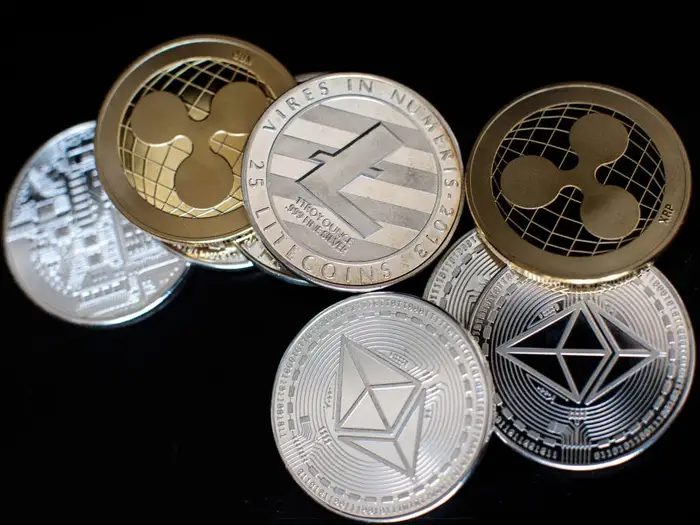
Ethereum (ETH) – The Smart Contract King
Ethereum is the name that most often occurs to people when they consider crypto outside of Bitcoin. Since its launch in 2015, Ethereum, created by Vitalik Buterin and a group of developers, has brought about a unique innovation in the possibility of executing smart contracts on a blockchain. This made Ethereum far more than digital money; it became the basis of DeFi (decentralized finance), NFTs, and thousands of applications that now constitute the Web3 ecosystem.
The first-mover advantage is the greatest strength of Ethereum. It has the biggest developer base in crypto, and its ecosystem is so massive to the extent that most projects are constructed upon it. In 2022, the network switched to the Proof of Stake (PoS) model, and this move reduced energy use by over 99 percent, and preconditioned the further upgrades of the scaling.
Naturally, Ethereum is not bothersome. Large gas charges have remained an issue and have many times been prohibitive to smaller users when the network is being used heavily. This has enabled rivals such as Solana and Avalanche to gain ground with alternatives that are cheaper and faster. U.S. regulators have also been arguing over the classification of Ethereum, which is a cause of uncertainty.
In the future, Ethereum has a roadmap with Danksharding and rollup-centric scaling, which may become a drastic efficiency increase, making the network not only cheaper but also more accessible. As institutional adoption increasingly rises, and due to ETFs and real-life asset tokenization, Ethereum is poised to become the dethroner of smart contracts and a key player in the upcoming bull run.
Solana (SOL) – Speed and Scalability
Solana has gained the reputation of being one of the most cost-effective and fast blockchains in the world. Introduced in 2020, Solana was created with a single large objective in mind, namely, to address the issue of scalability of blockchain without compromising on decentralization. Its exclusive Proof of History (PoH) processing permits the network to handle more than 65,000 transactions per second with minimal charges that are so much less that they are nearly worthless – in many cases under a fraction of a cent.
This has seen Solana become the chain of choice in NFTs, games, and meme coins due to its speed and affordability. The NFT boom saw the emergence of collections such as Degenerate Apes, Solana Monkey Business, etc., which have given Solana a chance to become a legitimate participant in the digital art market. Most recently, SOL has been revived by Pump. fun and the viral meme tokens, which have rekindled retail excitement in the ecosystem.
Nevertheless, Solana has not been luckier. During its initial years, the network experienced several malfunctions that caused issues of reliability. Centralization has been another problem identified by critics, and a relatively few numbers of validators exist as compared to Ethereum. Such difficulties, along with the aftermath of the bankruptcy of FTX in 2022 (Solana was a key participant in it), put the project to the test.
Now move forward to 2025 and Solana has not only managed to survive it has prospered. As developers keep on building a resilient retail community and institutional interest rebirth, SOL is once again a leading altcoin. In the event of the next bull run being fueled by NFTs, gaming, and meme speculation, Solana would be among the largest beneficiaries.
Avalanche (AVAX) – Subnets and DeFi
In 2020, Avalanche made a bold announcement promising fast, customizable, and highly scalable blockchains with its own subnet architecture. Contrary to Ethereum or Solana, Avalanche is not a single chain only, but developers can design their own specialized blockchains (so-called subnets) and enjoy the advantages of Avalanche in terms of security and speed.
This modularity has rendered Avalanche especially attractive with regard to DeFi protocols, enterprise implementations, and game ecosystems. Subnets may also be customized to be compliant, performance-specific, or industry-specific, allowing Avalanche to have a more versatile advantage over more fixed architectures. Its almost instant finality of transactions (approximately 1 second) and low cost have established AVAX as one of the most developer-friendly Layer-1s in the space.
Its DeFi ecosystem, with products such as Trader Joe, Benqi, and Pangolin, has been a steady stream of action. Subnet adoption, however, has been slower than it was originally believed would happen, and Avalanche competes directly with Ethereum rollups, Solana, the high-speed network, and Cosmos with its interoperability model.
In spite of the difficulties, Avalanche is a powerful competitor. Its collaboration initiatives with other institutions and firms demonstrate a rational change to the real-world application, rather than retail guessing. As soon as large actors start to roll out regulated subnets on Avalanche, it might produce structural demand on AVAX and solidify its infrastructure story.
Going into the next bull run, Avalanche represents an interesting combination: a high-quality infrastructure investment with enterprise potential, and an engaged DeFi ecosystem that might be rewarded by new interest in the market.
Chainlink (LINK) – Powering the Oracle Economy
Assuming that Ethereum is the operating system of crypto, Chainlink is the data layer that helps to make everything work. Chainlink was launched in 2017 and was the first open-source system to use decentralized oracle systems, which inject real-world data (such as asset prices, weather, or sports results) into blockchain applications. The smart contracts would have no interactions without the oracles and would not be able to communicate with the external world.
Chainlink was soon the market leader in this area with tens of billions of dollars in decentralized finance (DeFi). Its oracles drive lending protocols, decentralized exchanges, and derivatives platforms, and make sure that smart contracts operate on valid data that cannot be altered.
Chainlink has not stopped at that, though. The most recent innovation it has had in the past few years is the Cross-Chain Interoperability Protocol (CCIP), which is aimed at integrating various blockchains and conventional financial systems. With the crypto industry progressing towards real-world asset tokenization and institutionalization, CCIP might become the solution that connects blockchains to banks, payment systems, and capital markets.
Chainlink, of course, is competing with newer providers of oracles, and its usage is largely dependent on the success of DeFi and tokenized assets in general. When there is a slow growth in those sectors, the growth of Chainlink may slow.
Nevertheless, Chainlink plays a vital part in the infrastructure of crypto. As the collaborator in DeFi projects, as well as in traditional finance, LINK is poised to be an important facilitator of the next era of blockchain utilization. Chainlink may shine even more in a bull run that is driven by tokenized assets and interoperability.
Polkadot (DOT) – Interoperability Pioneer
Polkadot was founded in the audacious style of Ethereum co-creator Gavin Wood, whose vision was to establish an internet of blockchains. Rather than a single chain taking over, Polkadot links several highly specialized blockchains (known as parachains) to its overlaying relay chain, enabling such blockchains to share security and to interact with each other seamlessly.
Such a design is effective in that it addresses one of the largest issues of crypto, that of interoperability. Most blockchains in the contemporary ecosystem are silos, and it is not easy to freely move assets and data. Polkadot is set to address that and introduce a scalable multi-chain environment that will allow developers to create custom blockchains to an extent but continue enjoying the shared infrastructure of Polkadot.
Polkadot is also a leader in terms of on-chain governance. As opposed to most blockchains, in which decisions are slow and disputed, DOT token holders can vote on upgrades and changes, facilitating easier and more democratic decisions. This has seen Polkadot become popular amongst developers who appreciate flexibility and community-based development.
That notwithstanding, Polkadot has not come easy. Its uptake as a parachain has not been as high as anticipated and has been directly competing with Cosmos (including its Inter-Blockchain Communication protocol) and more recent interoperability solutions such as LayerZero. To remain competitive, Polkadot needs to move faster and get flagship projects that would showcase its unique advantages.
Going into the next bull run, Polkadot is a long-term infrastructure investment. Once cross-chain communication becomes the new story, DOT might become one of the most significant networks that will drive the multi-chain future.
Cardano (ADA) – Research-Driven Blockchain
Cardano has never followed the way of its competitors. Though one of the co-founders of Ethereum, Charles Hoskinson, is the founder of Cardano, which is based on a philosophy of academic research, peer review, and formal methods. All upgrades undergo stringent testing before implementation, and as such, Cardano is among the most cautious – but arguably also one of the safest – blockchains in the business.
This step-by-step strategy has made a sequence of significant achievements. The Alonzo upgrade introduced smart contracts to the network, which made it possible for decentralized applications and DeFi. More recently, Hydra scaling solutions have been pursued to increase throughput and may cause Cardano to be more competitive regarding speed and efficiency.
The greatest asset that Cardano possesses is its community and long-term vision. The Cardano adherents of ADA are notoriously devoted, and they tend to underline the idea that Cardano has to serve the underbanked with the blockchain-based identity, payment, and governance solutions. It is not as speculative as projects of more speculative use.
Nevertheless, there is also criticism directed at Cardano. It has been characterized as a slow-innovation chain by some people, particularly when compared to more aggressively moving ecosystems such as Solana or Avalanche. The high usage dApps on Cardano is not yet very large, and it must be more widely used to meet the vision.
Going forward, Cardano may gain during a bull run in case its platform of DeFi, NFTs, and identity tools develops. ADA is not the quickest or slickest blockchain, but a research-driven and systematic alternative that may be worthwhile to patient believers.
Toncoin (TON) – Backed by Telegram
The Open Network, known as Toncoin, has one of the most unusual benefits in crypto: it is directly connected to Telegram, the messaging app with over 800 million users across the world. TON was created by Telegram itself, but in 2020, the company was pushed back by regulation, forcing it to withdraw. However, the society brought the project back on track, and currently, Toncoin is gaining traction with Telegram publicly adopting it again.
TON is so powerful because of the integration with Telegram. Toncoin can be sent and received in the app, paving the way to instant payments, tipping, and microtransactions in one of the most popular social platforms. This might onboard millions of users without their awareness of crypto, a massive gain as far as mainstream adoption is concerned.
Technically, TON will be fast and scalable and can serve high volumes of transactions at low costs. This places it in a position not only to make payments, but also to decentralized applications, non-fungible tokens, and games on the Telegram ecosystem.
Naturally, it has its difficulties. TON is also under regulatory threat, particularly given that Telegram has already been targeted by the SEC. Whether users will view Toncoin as a speculative asset or even use it to pay and apply is also an issue.
Provided Telegram proceeds to roll out TON as its official blockchain, it would be one of the most consumer-friendly cryptos ever, and it would have enormous upside in the next bull market.
Arbitrum (ARB) – Ethereum’s Scaling Leader
Ethernet Ethereum might be the king of smart contracts, but it has never scaled well. And that is where Arbitrum comes in. Arbitrum is one of the most popular Layer-2 rollups in Ethereum, as it allows lowering the cost of gas and accelerating transactions because it works off-chain and settles safely on Ethereum. This renders it cheaper and more efficient for the user whilst enjoying the security of Ethereum.
Arbitrum became the most popular rollup in terms of total value locked (TVL) since its launch. Uniswap, GMX, and Aave, the most popular applications in DeFi, have integrated Arbitrum, and it has become a destination for traders seeking reduced fees without switching out of Ethereum. An active developer community has also been a part of ever-increasing dApps in the fields of DeFi, gaming, and infrastructure.
Nonetheless, Arbitrum has no competitors. Optimism, zkSync, and StarkNet are all rivals and are competing to be the dominant rollup with their own scaling methods. Ongoing arguments are also on governance and tokenomics, especially the distribution of the ARB token and its use beyond governance.
Irrespective of these obstacles, Arbitrum is well-placed as it enters the next bull cycle. When Ethereum demand rises, be it through DeFi, NFTs, or tokenized assets, Layer-2 networks such as Arbitrum will be needed to manage the traffic. That makes ARB a scaling foundation of the Ethereum development more natural.
Polygon (MATIC / POL) – Multi-Chain Scaling
Polygon began as a basic Ethereum sidechain but has since grown to be one of the most diverse scaled ecosystems in crypto. It currently provides a collection of solutions – sidechains, rollups, and zero-knowledge (zk) technology – all of which are geared toward making Ethereum faster and cheaper to users and developers.
Brand partnerships are one of the largest strengths that Polygon has. Polygon has been selected by companies such as Disney, Starbucks, Reddit, and Nike to use across blockchain projects such as NFTs and loyalty programs. Such partnerships can also make Polygon a leader in mainstream adoption by becoming the bridge between the giants of the Web2 and the Web3 ecosystem.
Polygon also enjoys a huge and heterogeneous community of developers. Its infrastructure has DeFi, NFTs, gaming, and enterprise applications, and it has one of the most comprehensive ecosystems, not including Ethereum itself. The fact that the network is in the process of changing its MATIC to POL indicates the desire to allow various scaling methodologies to be put under the same brand.
With that said, Polygon has problems. Temperance faded in 20232024 with the appearance of Arbitrum, Optimism, and zk rollup competition. Other investors are also not sure of the change of brand and how POL will blend with already used MATIC cases.
Nevertheless, the flexibility of Polygon is a significant strength. It has staying power by providing various scaling tools and having a high-profile partnership. Should mainstream adoption continue to pick up, Polygon will be an important point of entry as a portal into Web3 on the business and consumer side.
Meme Coin Pump (PUMP) – Viral Speculation on Steroids
Meme Coin Pump (PUMP) is a meta-token born from the explosive growth of Pump. fun, a Solana-based meme coin launchpad that allows anyone to create and trade tokens with minimal friction. The platform removes technical barriers entirely — users can mint a token in seconds, and a bonding curve automatically generates liquidity, making every meme coin instantly tradable. PUMP itself is positioned as the ecosystem token, representing exposure to the broader speculation layer driving the meme economy on Solana.
Unlike traditional cryptocurrencies with defined use cases or roadmaps, PUMP thrives on pure market psychology — virality, hype, and the cultural momentum of internet memes. Its appeal lies in its simplicity: speculative fun with real upside potential, especially in retail-driven bull cycles. During the 2023–24 mini bull run, Pump. fun captured massive attention on Crypto Twitter, giving birth to dozens of coins that reached millions in market cap within days. PUMP benefited from this trend, becoming a bet not on any single meme coin, but on the meme ecosystem.
However, the risks are as obvious as the rewards are tempting. Most tokens are created on Pump. fun has no intrinsic value and is abandoned within days. Rug pulls, liquidity traps, and hype-driven volatility are common. Still, meme coins continue to serve an important role in crypto: onboarding new users, driving volume, and defining each cycle’s cultural tone. As 2025 unfolds, if the market turns euphoric again, platforms like Pump. fun — and meta-plays like PUMP — may become unexpected leaders in speculative performance.
Conclusion
The 10 altcoins discussed in this article are the various combinations that will drive the next crypto bull run. Infrastructure staples to the wildest of the wild moonshots, they each have a uniquely different position in the changing ecosystem.
Etherium (ETH) is the base layer of crypto finance, the most innovative smart contract platform, DeFi, and tokenized assets. The unparalleled speed and an engaged retail community support NFTs and meme coin culture with Solana (SOL). Avalanche (AVAX) has a Subnet architecture, a modular infrastructure aimed at enterprise and institutional adoption. Chainlink (LINK) facilitates real-world connectivity with the help of oracles, which puts Chainlink as the key data layer of on-chain assets and DeFi protocols.
Polkadot (DOT) and Cardano (ADA) are both great visions of interoperability and academic rigor, respectively. Although both have slower adoption curves, their potential in the long term depends on the ability to provide scalable and secure ecosystems with practical utility.
Its unique feature is a huge distribution advantage through Telegram, which has a very rare quality of simultaneously serving Web2 and Web3 functions in Toncoin (TON). Arbitrum (ARB) and Polygon (MATIC/POL) are the leaders of the Ethereum Layer-2 race in the scaling wars, with the former taking a rollup dominance strategy, and the latter with a multi-chain structure and major company alliances.
Lastly, Meme Coin Pump (PUMP) is the crypto speculative ethos in its chaotic, risky, and incredibly profitable form. It embodies commercial mania and social virality, which tend to fuel liquidity in euphoric stages.
Collectively, the altcoins offer exposure to core infrastructure, scalability, consumer applications, and pure speculation, the four pillars of every significant crypto cycle. A portfolio with a balanced distribution of these categories and a narration-aware aware could be the best opportunity to be in the next wave of growth in 2025.